
Road bike saddles


Starting at £200.03
£139.14


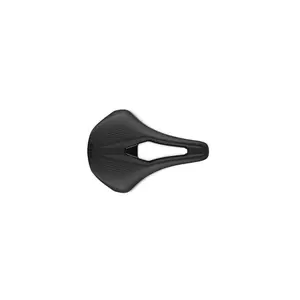
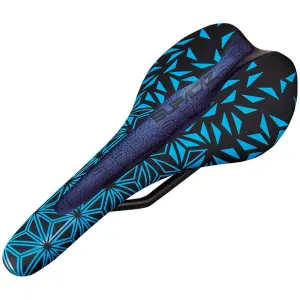
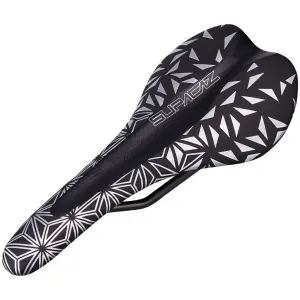
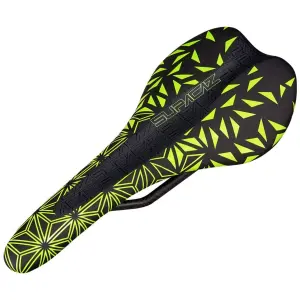
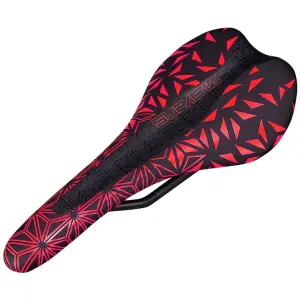
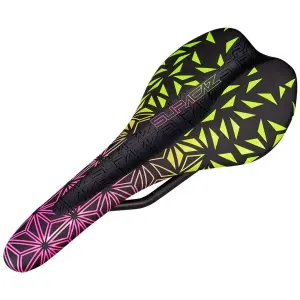


Our selection of road Saddles includes the Selle Italia Novus and Flite with Superflow cut-out, the San Marco Carbon FX, the short-nosed Prologo Dimension and Pro Stealth saddles, the Repente Artax, and noseless saddles ISM for road cycling, time trials and triathlons, along with our advice on width, shape and adjustment.
Comfort, at the main pressure point.
Saddle Width and Ischial Spacing
Comfort on a road saddle primarily depends on the width: the two ischiums, the bony protrusions of the pelvis, should rest on the back part, which is the flattest. Selle Italia offers its models in two widths, S and L, separated by about ten to fifteen millimeters, recommending the S for cyclists whose ischial spacing is less than twelve centimetres. The more the torso leans forward, the more the support shifts towards the nose, where the saddle tapers: a very elongated rider can therefore choose a saddle that is a bit more narrow than a more upright road cyclist. A saddle that is too wide rubs on the insides of the thighs with every pedal stroke, while one that is too narrow leaves the ischiums unsupported.
The Components
Road components are also available:
All components are gathered on the peripheral components page.
Central Cutout, Short Nose or Nose-less Saddle
Three designs address perineal pain. The central cutout, like the Superflow from Selle Italia on the Novus and Flite, removes the centre of the saddle to relieve pressure on soft tissues. The short nose, around two hundred and forty-five millimetres long on the Prologo Dimension, eliminates the front part that can be bothersome in a low position; the Pro Stealth and Boost versions of the Novus and Flite follow the same principle. The nose-less saddle ISM, shaped with two separate branches, supports the pelvis on the bones without compressing the centre: the PN, narrow and long, is suitable for road cycling, while the PS models, shorter and raised at the back, are designed for the aero position on extensions.
Rails, Shell and Padding: Weight and Support
Under the saddle, the rails play a crucial role in weight and vibration absorption. Rails made of manganese steel or chrome-molybdenum are sturdy and cost-effective, titanium is lighter, and carbon, like on the San Marco Carbon FX, reduces weight further but requires a compatible seat post clamp and a proper torque. Seven by nine millimetre oval carbon rails sometimes need an adapter. The rigidity of the shell and the thickness of the padding determine performance over long hours: on the road, a firm saddle supports better than a thick cushion that compresses and ultimately puts pressure on sensitive areas.
Good Deals
Good deals can also be found in the good deals, promotions, clearance, sales, Black Friday. The new arrivals showcase the latest collections, and items shipped within 24 hours are prepared and dispatched in 24 hours. The highlights of the year follow a stable order: the Black Friday in late autumn, the end-of-year holidays, the winter sales, the French Days in spring, then the summer sales and back-to-school.
Frequently Asked Questions
How do you adjust the saddle height on a road bike?
With your heel on the pedal at the bottom of the stroke, your leg should be straight; once your foot is in the normal position, there should be a slight bend in the knee. Your pelvis shouldn’t rock side to side while pedalling.
Why are road bike saddles so hard?
A firm saddle supports the ischiums without sinking down, while thick padding compresses and redirects pressure to the perineum. Comfort comes from the chamois in the shorts and the correct width, not from the thickness of foam.
How long does it take to get used to a new saddle?
Expect a few rides, often two to three weeks of regular use, before judging a saddle. Persistent discomfort or numbness indicates a shape or width that isn’t suitable.
What saddle should a woman choose for road cycling?
Women typically have wider ischial spacing, which suggests a wider saddle. A wide central cutout relieves the genital area: many unisex models with cutouts are also suitable for female cyclists.
What angle should you set your road saddle at?
The saddle should be level, checked with a bubble level from the nose to the back. A slight forward tilt can relieve pressure on a saddle without a cutout, but if too pronounced, it can cause the pelvis to slide and overload the hands.






