
Steering bearings and Cups


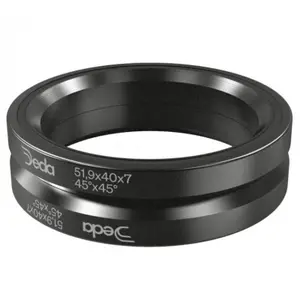


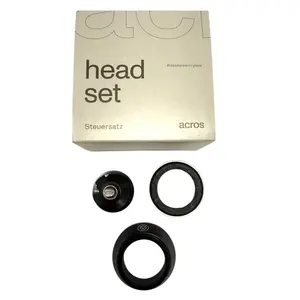
Our selection of Headsets and Cups brings together parts to restore the steering of a road bike: Enduro angular contact bearings, integrated headsets VP Components and pressed cups, along with our tips for reading a SHIS code, distinguishing a straight steerer from a tapered one, and adjusting the preload without any notch.
A smooth and play-free steering.
Read the SHIS code of your frame
The SHIS, or Standardized Headset Identification System, describes each bearing housing with two letters and two numbers. The letters indicate the type: IS for integrated, ZS for zero stack, EC for external cup. The first number indicates the internal diameter of the steerer tube in millimetres, while the second indicates the diameter of the crown or the ring that receives it. A complete code is read in two parts, top and bottom, for example ZS44/28.6 on top and ZS56/40 on the bottom for a crown tapered headset. The frame manufacturer provides this code: it’s the only reliable information before placing an order.
The components
Road components are also available as follows:
All components are gathered on the peripheral components page.
Headset angles: thirty-six or forty-five degrees
Modern headsets use cartridge bearings with angular contact, whose rings are chamfered to rest against the housing and on the compression ring. Two angles exist: thirty-six degrees on the frame side and forty-five on the crown side, the most common combination, or forty-five degrees on both sides, specific to certain frames. A bearing at the wrong angle rotates poorly and marks its housing. Enduro bearings can be replaced on their own when the frame housing is intact, without changing the entire set; their diameters and angles are noted before ordering.
Crown tapered headset, compression ring and adjustment
On most recent road forks, the crown is tapered: one inch and an eighth at the top and a wider diameter at the bottom, either one inch and a quarter or one and a half depending on the frames. The lower bearing seats on a crown race fitted to the fork, while the upper is held by a split compression ring. To adjust, loosen the stem, screw down the cap until all play is removed, with the front brake tightened, then check that the fork rotates freely before tightening the stem to the correct torque. A crown made of carbon requires a expander, never a star nut.
Good deals
Good deals can also be found in good deals, promotions, clearance, sales, and Black Friday. The new arrivals showcase the latest collections, and items shipped in 24h are prepared and sent within 24 hours. The highlights of the year come in a stable order: Black Friday at the end of autumn, the holiday season, winter sales, the French Days in spring, then the summer sales and back to school.
Frequently asked questions
When should you change the headset of a road bike?
When the headset drops into a notch when going straight, if it clicks when braking, or when the bearings grind despite adjustment. Sweat dripping onto the headset during home trainer sessions also speeds up bearing corrosion.
Can you only replace the bearings of an integrated headset?
Yes, since the bearings are fitted directly into the frame. You note the dimensions engraved on the old bearing: outer diameter, inner diameter, height, and angles, then choose an identical reference.
Should you grease a headset?
Cartridge bearings are sealed, but a thin layer of grease on the housings, the compression ring, and the spacers prevents corrosion and squeaking. Wipe off any excess to avoid attracting dust.
Where do the creaks at the front of a road bike come from?
They often come from a dry compression ring, poorly seated spacers, or a cap that is insufficiently tightened. A disassembly, cleaning, and light greasing are usually enough to restore silence.
What tools are needed to change a headset?
An integrated headset can be disassembled with Allen keys and a plastic mallet. The cups of an external or semi-integrated headset require a press and a puller, along with a bearing puller for the crown race.






