
Road bike peripheral components


Starting at £73.37
£62.96





The road bike components page brings together the parts that set the rider's position: ISM and Repente saddles, setback seat posts XLC, handlebars and extensions Zipp Vuka, tape Cinelli and Supacaz, automatic pedals Look Keo and Shimano, all the way to Favero Assioma pedals that measure power. Everything you need to fine-tune a setting, replace a worn part, or prepare for a time trial.
The parts that set your position on the bike, and therefore your comfort and performance.
Automatic pedals Look, Shimano and sensor Favero
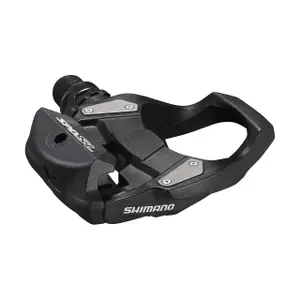
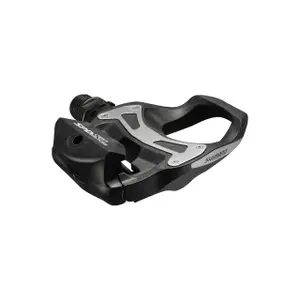
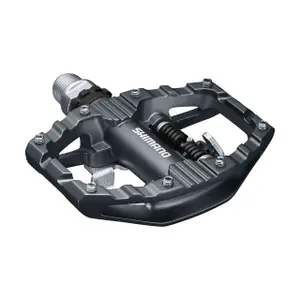
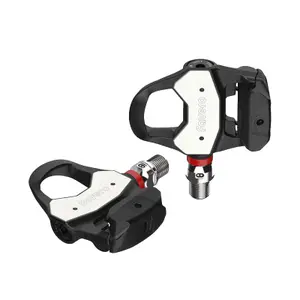
The automatic road pedal was born with Look: the PP65, designed in 1984 from ski bindings, was used by Bernard Hinault to win the Tour de France in 1985. The Look Keo models are its heirs, featuring a three-screw cleat and a wide platform. The SPD system from Shimano, with a small metal cleat embedded in the sole, allows for normal walking: its versatile pedals are suitable for commuting and touring. The Favero Assioma houses a power sensor in the axle: in Duo version, each pedal measures the watts of its leg, revealing the imbalance between left and right over time during training.
Road saddle: width of the sit bones and short nose
A road saddle is first chosen based on the width of the sit bones, the two bones you sit on, measured on a piece of corrugated cardboard or an impression cushion: the more the cyclist rides bent over, the more they lean forward, allowing for a narrower saddle. ISM saddles, with a short and split nose, relieve pressure on the perineum in an aero position, which is why they are popular in triathlons and time trials. The Repente Artax, more streamlined, is aimed at racing. The setback seat post, like the XLC Offset, moves the saddle away from the bottom bracket for cyclists with long femurs, while a straight post brings the position forward and opens the hip angle.
Handlebar, extensions and stem: the aero position
The road handlebar is chosen based on shoulder width, usually between 38 and 44 centimeters, followed by its drop, the vertical distance between the top part and the bottom of the handlebar, and its reach, the distance forward to the brake hoods. A compact drop makes the low position more accessible for less flexible cyclists. For time trials and triathlons, the extensions Zipp Vuka Evo attach to the handlebar and bring the forearms under the torso, resting on armrests. The stem, longer or shorter and angled, then adjusts the distance between the saddle and handlebar; it's changed in one-centimeter increments to avoid upsetting the bike's balance.
The selection
The components are organized by piece:
The road bike is completed with bikes, transmission, brakes, wheels and tyres, equipment, on the road page.
Handlebar tape and headset: maintenance
The handlebar tape is wrapped from the end of the handlebar towards the stem, overlapping each turn by a third of its width, in such a way that the hands, when pulling back, tighten the wrapping instead of loosening it. A thick tape absorbs vibrations from rough roads, while a thin tape keeps the feel of the handlebar; the Supacaz is known for its grip, and Cinelli offers designs by artists, like the one by Ana Benaroya. It is replaced as soon as it slips or tears. The headset, located in the frame's cup, is checked with the front brake applied: a click when pushing the bike indicates a play that can be taken up by the cap screw.
Frequently asked questions
Are Look Keo cleats compatible with other pedals?
No, although most road cleats are fixed with three screws, a Keo cleat only clicks onto a Keo pedal. Their colour indicates the angular freedom: none on black, a few degrees on grey, and more on red.
What height should a road saddle be set at?
With the heel on the pedal at the bottom of the stroke, the leg should be straight; once the foot is in the pedalling position, the knee should then maintain a slight bend. Another method multiplies the inseam by about 0.88 to get the distance between the crank axle and the top of the saddle.
What tightening torque for a carbon handlebar?
The torque is engraved on the stem, usually around 5 newton-metres for the cap screws. It is tightened in a cross pattern, gradually, using a torque wrench and an assembly paste for carbon, which prevents over-tightening.
Should you change your pedal cleats regularly?
Yes, plastic cleats wear out from walking: when the engagement becomes vague or the foot releases for no reason, it's time to change them. Cleat covers can limit wear when walking to a café or at the start of a cyclosportive.
Central channel saddle or full saddle for the road?
The channel or central opening relieves pressure on the soft tissues of the perineum, especially when leaning forward. A full saddle is suitable for those who do not experience any numbness; the width and profile, flat or curved, then matter more.






