
Chain and cassette tools
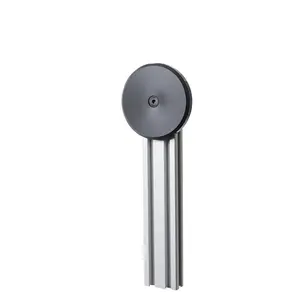


Starting at £58.37
£54.56
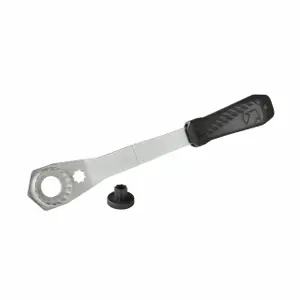
Our Chain and Cassette Tools page brings together the tools used to maintain a bike's drivetrain: chain wear indicator, chain tool, quick link pliers, chain whip, and cassette remover. Everything you need to check chain stretch, shorten it, open it for cleaning, or replace a worn cassette yourself, on a road bike, mountain bike, or city bike.
Maintaining your drivetrain, like a mechanic.
Wear Indicator: When to Change the Chain
The chain should be replaced as soon as the wear indicator shows a stretch of half a percent on an eleven or twelve-speed transmission, or three-quarters of a percent on up to ten speeds. The stretching is not due to the metal elongating but the wear on the pins and rollers, which develop play with each pedal stroke. The tool fits between two rollers: if its tab completely sinks in, the chain needs replacing. Checked every few hundred kilometres, a chain changed in time protects the cassette and the chainrings, which are much more expensive.
The Whole Workshop
Bicycle tools also come in:
All tools are gathered on the tools page.
Chain Tool and Quick Link Pliers
The chain tool pushes the pin of a link to open the chain, adjust it to the right length, or remove a bent link. Its head needs to match the width of the chain: a tool designed for eleven or twelve speeds works on thinner links. On a chain closed with a connecting pin, the old pin is never pushed back in: a new pin or a quick link is used. The quick link pliers open and close these fasteners without hurting your fingers; some fasteners are single-use, so you must follow the manufacturer's instructions before reusing them.
Chain Whip and Cassette Tool: The Right Method
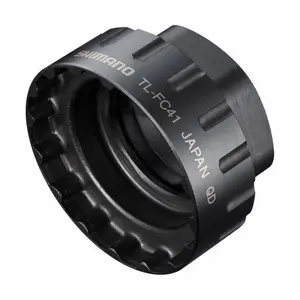
To remove a cassette, the chain whip holds the cogs in place while the cassette tool, engaged in the notches of the locknut and driven by a wrench, unscrews the nut counterclockwise. The imprint of the tool depends on the standard of the freewheel body: the most common one works for most road and mountain bike cassettes, while some Italian manufacturers have their own. When reassembling, tighten the nut to the specified torque, often between thirty and fifty newton-metres. Older screw-on freewheels require a specific extractor.
Good Deals
Great bargains can also be found in the good deals, promotions, clearance, sales, Black Friday. The new arrivals showcase the latest collections, and items shipped in 24h are prepared and dispatched within 24 hours. The major events of the year follow a stable order: Black Friday in late autumn, the year-end holidays, winter sales, the French Days in spring, then summer sales and back-to-school.
Frequently Asked Questions
Is a wear indicator more reliable than a ruler?
The graduated ruler is still a good method: twenty-four half-links normally measure twelve inches, or about thirty and a half centimetres. The indicator provides the same information more quickly, without calculations, and indicates the replacement threshold directly.
How do you determine the length of a new chain?
You take the length of the old chain if the transmission hasn’t changed. Otherwise, loop the chain over the big chainring and the largest sprocket without engaging it in the derailleur, then add two links, a common rule to check in the derailleur’s manual.
Does a chain tool work on all chains?
Most accept chains from one to twelve speeds, but the thinner ones require a precise tool with well-guided pins. A workshop chain tool, which is more rigid than a pocket model, avoids deforming the plates of modern chains.
Can you remove a cassette without a whip?
No, without a whip the cassette turns with the freewheel as soon as you apply force to the wrench. When reassembling, the whip becomes unnecessary: the ratchet of the freewheel holds the cogs in place during tightening.
What transmission tools should you take on a ride?
A small chain tool and a quick link adapted to the number of speeds are enough to fix a broken chain by the roadside. The quick link pliers, whip, and cassette tool stay in the workshop.






