
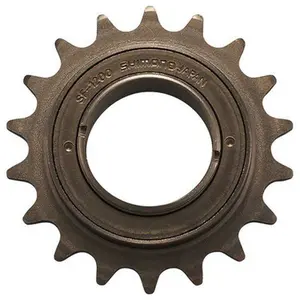
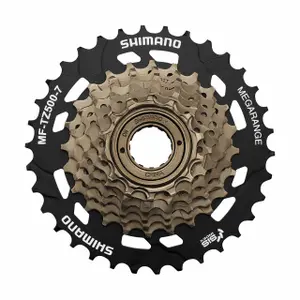
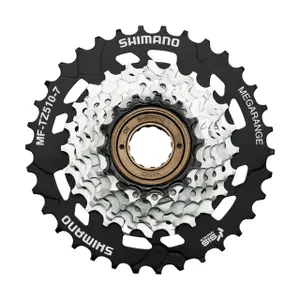
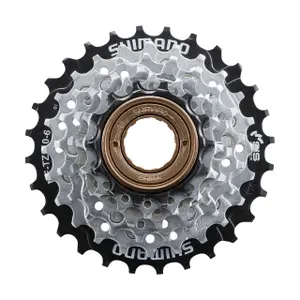
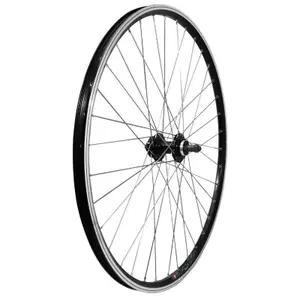
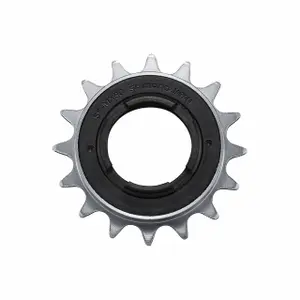
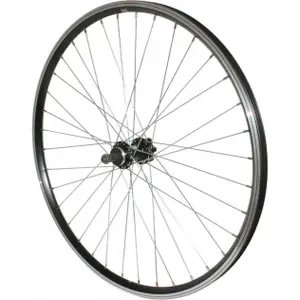
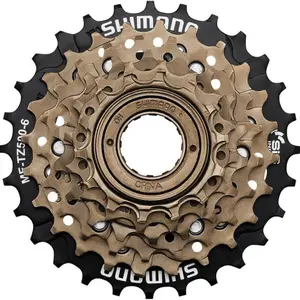
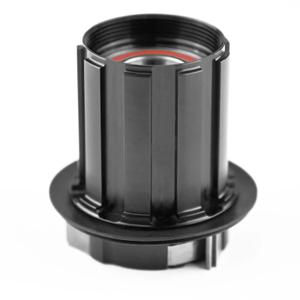
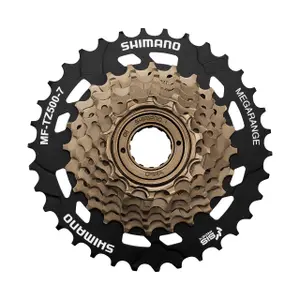
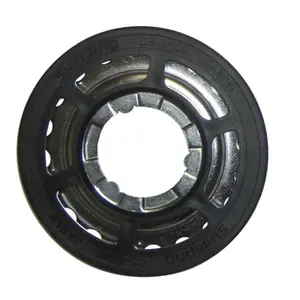
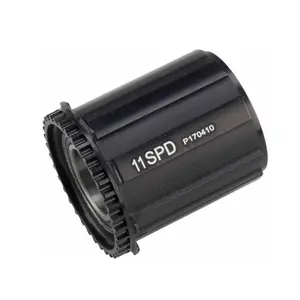
Freewheel body for rear hub

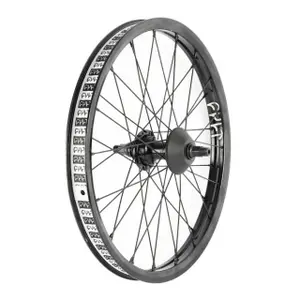
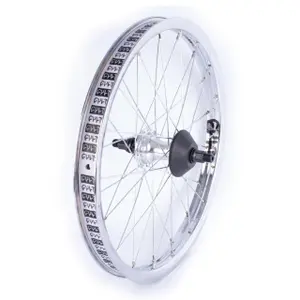
Starting at £36.69
£30.76
Our freehub body page explains the part that connects the cassette to the rear hub: the Shimano HG, Sram XD and XDR, Shimano Microspline and Campagnolo standards, the ratchet or pawl mechanism, the number of engagement points, and maintenance that keeps a freehub reliable, whether you prefer it quiet or loud.
The link between the cassette and the wheel.
Train the freehub, then let it spin
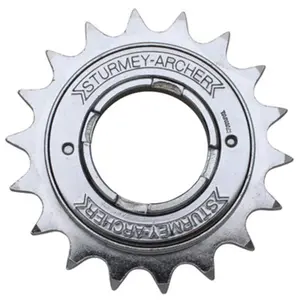
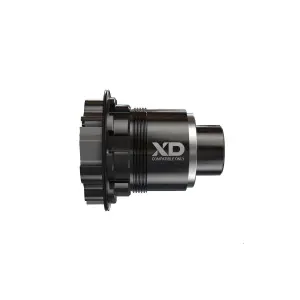
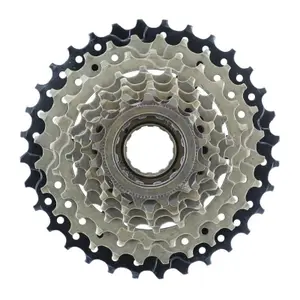
The freehub body is the notched cylinder fixed on the right side of the rear hub, onto which the cassette fits. It contains a one-way mechanism: when pedalling, it engages with the hub and transmits the effort to the wheel; when you stop pedalling or backpedal, it disengages and the wheel keeps spinning on its own. This system has replaced the old screw-on freewheel, where the sprockets and mechanism formed a single block: now, the cassette can be removed without touching the mechanism, and the body can be replaced separately, without changing the wheel.
Other wheel components
Wheels also come in:
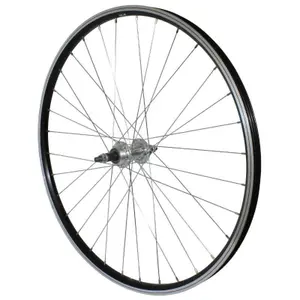
All wheels are gathered on the wheels page.
HG, XD, XDR, Microspline: each cassette has its standard
The body is chosen according to the cassette. The Shimano HG, the most common, accommodates cassettes with eight to eleven speeds from Shimano and Sram; in road version with eleven speeds, it is slightly longer. The Sram XD, for MTB, and its variant XDR for road, which is nearly two millimetres longer, allow for a smaller ten-tooth sprocket due to a cantilever-mounted cassette. The Microspline, launched by Shimano in 2018 with its twelve-speed MTB group, also accommodates a ten-tooth sprocket. Campagnolo maintains its own tooth profile.
Ratchets, pawls, and engagement points
Two main families of mechanisms coexist. Ratchets, small claws pushed by springs, engage with a toothed ring: simple and lightweight, they create the typical clicking sound of the freewheel. The pawl system presses two toothed discs against each other that engage over their entire surface for great reliability. The number of engagement points measures responsiveness: the higher it is, the quicker the hub drives after a stop in pedalling, which is an advantage for accelerating in MTB on technical sections. A light cleaning and lubrication with the grease recommended by the manufacturer extend the life of the mechanism.
Good deals
Good deals can also be found in the good deals, promotions, clearance, sales, and Black Friday. The new arrivals showcase the latest collections, and the items shipped in 24h are prepared and dispatched within 24 hours. The highlights of the year follow a stable order: Black Friday in late autumn, the end-of-year holidays, the winter sales, the French Days in spring, followed by summer sales and back-to-school promotions.
Frequently asked questions
What freehub body for a nine-speed cassette?
A Shimano or Sram cassette with eight, nine, or ten speeds fits on a standard HG body. On a road body designed for eleven speeds, a thin spacer is needed to fit the cassette.
How to remove a freehub body?
Remove the cassette with a cassette tool and a whip, then the end caps and the hub axle. Depending on the model, the body either unscrews with a large hex key or pulls off simply by hand; refer to the hub's manual.
Is a noisy freewheel worn out?
The clicking sound is normal and varies by hub. A popping sound, skipping under load, or slipping on start-up indicates dirty or worn ratchets that need to be cleaned or replaced quickly.
Is the freehub body of an electric bike different?
With a pedal-assist motor, the rear hub and its freehub body remain standard, but they can handle a higher torque. A robust mechanism and regular wear checks are recommended.
Can you switch from a Shimano cassette to a Sram without changing the body?
Up to eleven speeds, Sram cassettes compatible with HG fit on a Shimano body. In twelve-speed MTB, Sram uses the XD body and Shimano the Microspline: you'll need to change the body, if the hub allows it.






