
Athletic shoes on clearance


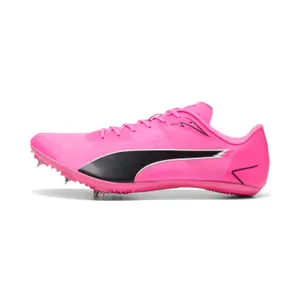


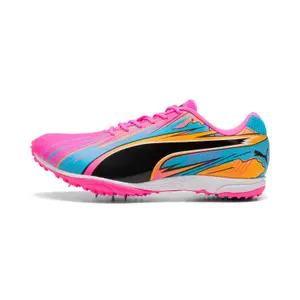
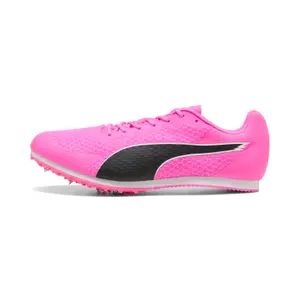


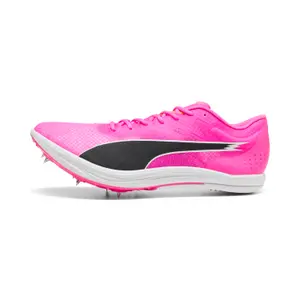
The spike running shoes gathered here in the end-of-series cover all events: sprints and hurdles, middle-distance, track distance, jumps and cross-country. You'll find the adidas Adizero, sprint spikes from Puma evoSPEED, the Nike ZoomX Dragonfly XC for the fields, the Saucony Terminal VT and the Hoka Crescendo MD for long races, as well as versatile models for young athletes.
Quality spikes for the track, at more affordable prices.
A spike for every event family
Every spike shoe is designed for a specific family of events. Sprint spikes, like the adidas Adizero Prime SP or the Sprintstar, feature a rigid plate under the entire forefoot and almost nothing under the heel: the runner stays on their toes from start to finish. Middle-distance spikes, such as the adidas Adizero Ambition or the Hoka Crescendo MD, keep a bit of cushioning for the eight hundred to fifteen hundred meters. For the five thousand and ten thousand meters, the Saucony Terminal VT, the adidas Avanti, or the Distancestar soften the plate even more. Long jumpers opt for the adidas Adizero LJ, with a reinforced plate to handle the jump.
The other clearance items
Athletics clearance also includes:
- Clothes, bras, shorts, and vests.
- Bags.
- Accessories, keys, and replacement spikes.
All clearance items are gathered on the athletics page.
Cross-country: spikes for grass and mud
Cross-country, which is run in winter on grass, dirt, and mud, requires specific spikes. The Nike ZoomX Dragonfly XC and the adidas Adizero XCS combine a studded sole, which grips in corners and climbs, with spots for long spikes, chosen based on the terrain condition. Their upper better withstands water and splashes than a track spike, and a thin layer of cushioning protects against surface irregularities over several kilometers. On wet and soggy ground, the longest spikes are used; on dry and hard ground, short spikes are sufficient and spare the calves.
Spikes, sole thickness, and international regulations
The regulations from World Athletics precisely govern spike shoes. The sole must not exceed twenty millimeters in thickness for races under eight hundred meters, including hurdles, and for competitions, except for triple jump; it can reach twenty-five millimeters for races of eight hundred meters and for triple jump. Spikes must not exceed nine millimeters on the track, and many stadiums only accept seven-millimeter spikes to protect their synthetic surface. They are screwed in with the key designed for this purpose, ensuring they are tightened before each session: a loose spike can be lost in the first turn and damages the thread.
First spikes: models for young athletes
A young athlete who tries all events benefits from starting with a versatile spike. The adidas Adizero Jumpstar and the Allroundstar, available in children's sizes, are suitable for sprinting, long jump, and middle-distance: their plate is less rigid than that of a specialist model, and their slightly cushioned heel spares growing joints. The Puma evoSPEED Star serves the same purpose for teenagers. It is important to choose well-fitting spikes, with no space in front of the toes, as the foot must not slide during the jump; there is no need to allow for growth, which would negate the benefit of the plate.
Frequently asked questions
Can sprint spikes be used for long jump?
Yes to start with: the sprint plate and the spikes placed at the front are suitable for the run-up. Regular jumpers then switch to a jump spike, which is more stable at takeoff and better absorbs repeated jumps.
How long does a pair of spikes last?
Used twice a week, a pair generally lasts one to two seasons. The spikes are easily replaceable; it is the plate that cracks or the upper that loosens that signals the end of the pair, with a foot that no longer holds in turns.
Do you need to wear socks with spikes?
Many sprinters run barefoot in their spikes to maintain a perfect fit and the best feel of the ground. For longer distances, a very thin sock reduces blisters; it is primarily a matter of personal comfort.
When should you put on your spikes during warm-up?
Warm up first in training shoes, including jogging and drills. Put on the spikes for the final accelerations, about fifteen minutes before the event, to avoid fatiguing the calves before the race.
Can you run on roads with spike shoes?
No: asphalt dulls the spikes in just a few strides and damages the plate, and the lack of cushioning puts a lot of strain on the joints. Spikes are reserved for the track, grass, and jumping pits, and you should wear street shoes to get to the stadium.






