
Clearance Sale Athletics and Spikes
The athletics clearance sale brings together end-of-line items for the track and field: sprint spikes, middle-distance spikes, jumping spikes, and cross-country spikes, discus and weighted balls for throwers, adjustable high jump poles. Club athletes, young ones discovering all the events, and coaches equipping a group will find models from adidas, Puma, Nike, Hoka, or Saucony, and Tremblay equipment or Softee.
A pair of spikes from a previous series, at a softer price.
Sprint, middle-distance or cross-country spikes: read the plate
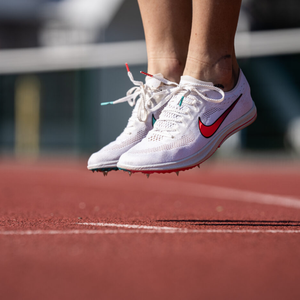
A spike is first chosen according to the distance run. For sprint, the rigid plate covers the whole front of the foot and the heel is almost absent: the adidas Adizero Prime SP and the Puma evoSPEED keep the athlete on the front of the foot from the start to the finish line. In middle distance, the plate becomes more flexible and a foam protects the heel: the Hoka Crescendo MD and the Saucony Terminal VT, with PWRRUN HG foam and a four-spike Pebax plate, can handle several laps without wearing out the calves. For cross-country, the Nike ZoomX Dragonfly XC broadens its base, adds a support strip under the arch and features six removable spikes for muddy and uneven terrains.
Athletics clearance sales
The athletics clearance is organised by type:
- Shoes, sprint, middle-distance and jumps spikes.
- Clothing, vests and shorts.
- Accessories, discs and equipment.
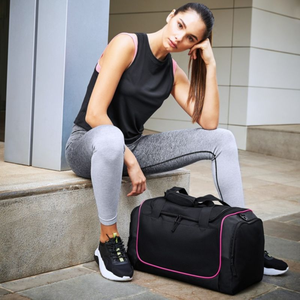
- Bags.
Jump spikes and versatile models for young athletes
Jumpers have specific needs. The long jump spike, like the adidas Adizero LJ, relies on a rigid plate that transfers the speed of the run to the take-off on the board. The Adizero Jumpstar, with a Pebax plate, six spikes at the front and a Velcro strap that locks the midfoot in place, is aimed at specialists in long jump, triple jump and pole vault. For younger athletes, who participate in all events, a versatile spike avoids the need to buy a pair for each discipline: the Adizero Allroundstar, with EVA foam and no carbon plate, works well for sprinting, jumping or throwing, and the Nike Rival Sprint is a simple first pair to discover the track in a club setting.
Other sports on clearance
The clearance extends to other sports: football, running, lifestyle, bikes, motorbikes, handball, basketball, equestrian, camping, on the clearance page.
Discus, weights and weighted balls: the right tool for the category
The weight of a throwing implement depends on the category and gender of the athlete. For seniors, the discus weighs two kilos for men and one kilo for women; cadets throw a one and a half kilo discus, like the Tremblay of this format, and female cadets a discus of eight hundred grams. The weight goes from five kilos for cadets to seven kilos two hundred sixty for men, and stays at three kilos for minors and female cadets. For beginners, the weighted ball Tremblay, striated and weighing two hundred grams, teaches the arm motion safely in a gym, and the training discus Trial is used for repetition sets on the club’s platform.
Frequently asked questions
What length of spikes is allowed on a synthetic track?
The World Athletics rule limits spikes to nine millimetres for most events on synthetic tracks, and to twelve millimetres for high jump and javelin. Many stadiums impose even shorter spikes: check with your club.
What shoe size should be chosen for spikes?
A spike should fit more snugly than a running shoe, with no space in front of the toes, as the foot should not move during pushes. Take your usual size, or even half a size down if the fit is loose, and try with thin socks.
How to care for spikes?
Unscrew the dull spikes with the provided key and clean the thread before fitting new ones. Leave the spikes to dry in the air, away from a radiator, and never walk on concrete or tiles with them, as these surfaces round off the spikes in just a few steps.
What are adjustable high jump poles for?
Adjustable up to two metres, the Softee poles allow you to set the bar one centimetre at a time and read each height without a tape measure. They are suitable for club training sessions and athletics schools, where the bar is raised progressively with each attempt.
Can you train in spikes at every session?
Spikes put a lot of strain on the calves and the Achilles tendon, as they position the athlete on the front of the foot with very little cushioning. They are reserved for speed sessions and competitions, while warming up and jogging should be done in running shoes.






