
Badminton rackets on clearance
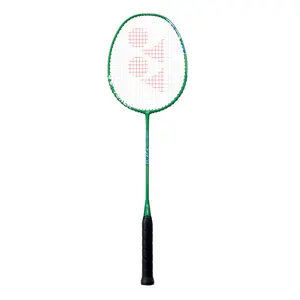
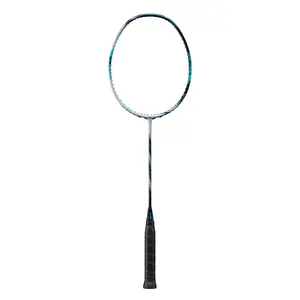
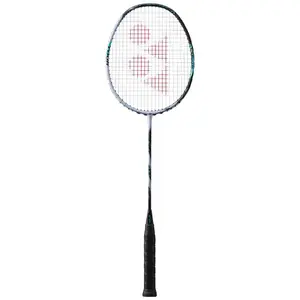
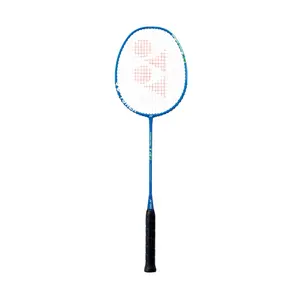
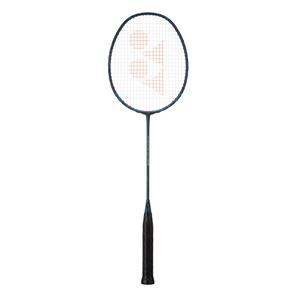
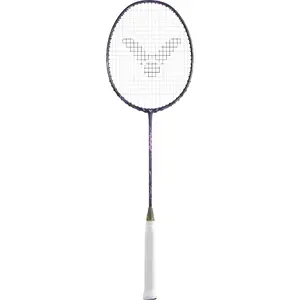
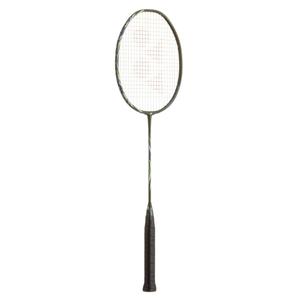
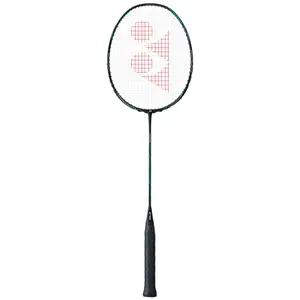
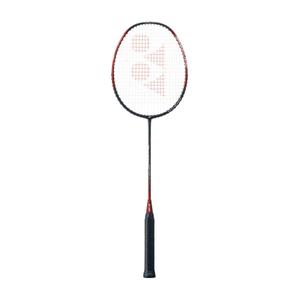
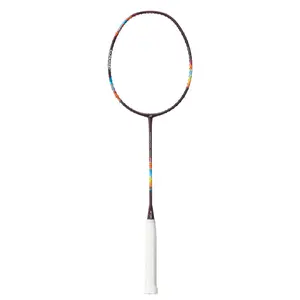
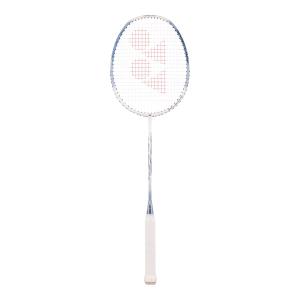
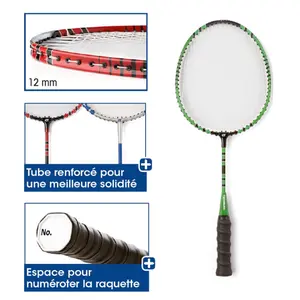
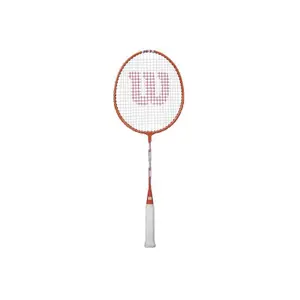
The badminton rackets presented here as end-of-line models range from school models to competition frames: Yonex Astrox, Nanoflare and Isometric, Babolat Satelite and X-Feel, Victor Auraspeed and Carlton Velocitex. Each player can find a weight, balance and stiffness that suits their level, from the beginner in clubs to the attacker who wants heavier smashes, in singles as well as doubles.
A quality racket from a previous generation.
Heavy or light head racket: balance
The balance of a badminton racket, meaning the distribution of its mass between the handle and the head, determines its character. A heavy head, like the Yonex Astrox, extends the momentum of the arm and adds weight to smashes and clear shots from the back of the court: a choice for attackers, suitable for singles or the back of the court in doubles. A light head, like the Yonex Nanoflare or Victor Auraspeed, recovers faster after each strike, which benefits net play, quick defenses, and flat exchanges. Between the two, a neutral balance suits the versatile player who alternates between attack and defense throughout the points.
The other clearance items
Badminton clearance also includes:
- Shuttles, feathers and plastic.
- Shoes.
- Clothing.
- Bags.
- Club Equipment, posts and nets.
All clearance items are gathered on the badminton page.
Reading the weight in U and the handle size in G
The weight of a racket is indicated by the letter U written on the frame, a system popularised by Yonex: the higher the number before it, the lighter the frame. A racket marked 3U weighs between eighty-five and eighty-nine grams, a 4U between eighty and eighty-four, a 5U between seventy-five and seventy-nine. The letter G indicates the handle circumference, again in the opposite way to the number: a G4 handle measures about eighty-six millimeters in circumference, a G5 about eighty-three. A 4U frame with a G5 handle is a common starting point for an adult, with the possibility of thickening the grip with a overgrip.
Flexible or stiff handle according to your stroke
The stiffness of the handle, or flex, is as important as the weight. A flexible handle bends upon impact and returns that energy when hitting: it helps beginners and players with a still short stroke to send the shuttle to the back of the court. A stiff handle hardly flexes: it demands a quick and well-whipped stroke, but rewards the advanced player with a more accurate trajectory and a more direct strike. The Isometric frame from Yonex, with a head more square than a classic oval, increases the effective strike zone and forgives mis-hits off the center of the string bed, making it a reliable choice for progressing without getting discouraged.
Stringing and tension: what changes at impact
The stringing of a badminton racket is adjusted in kilograms or pounds of tension. Moderate tension, around nine to ten kilos, makes the string bed more elastic: the shuttle travels further with less effort, which suits recreational play. Experienced players increase to eleven or twelve kilos for more control, at the cost of a less forgiving string bed. A thin string, around sixty-six hundredths of a millimeter, offers more feel and bite; a thicker string lasts longer. A racket should be restrung when the tension noticeably drops or as soon as a string breaks, without exceeding the maximum tension indicated by the manufacturer on the frame.
Frequently asked questions
What badminton racket for a child?
Up to about ten years old, a child uses a junior racket, which is shorter and lighter, like school models. An adult racket that is too heavy strains the wrist and prevents learning a whipped stroke; a light adult frame then takes over.
How many times a year should you restring your racket?
A common guideline is to restring as many times a year as you play sessions per week. The string loses tension even without breaking: a shuttle that doesn't travel far or a dull sound at impact indicates that it's time.
How to hold a badminton racket?
In a universal grip, hold the handle as if shaking hands, with the string bed perpendicular to the ground and your fingers relaxed. For the backhand, slightly rotate the racket and place your thumb flat on the handle to push the shuttle.
Carbon or aluminium racket: what's the difference?
Aluminium or steel are used for beginner rackets: durable and economical, they are heavier and less responsive. Graphite, or carbon, lightens the frame and makes it stiffer, for a quicker and more precise strike as soon as you play regularly.
How to protect your badminton racket?
Store it in a case, away from heat, never in a car in direct sunlight which loosens the strings. In doubles, avoid collisions with partners at the net, and replace the grip as soon as it slips to maintain a secure hold.






