
Badminton Clearance
The badminton clearance brings together end-of-line products for the court and changing room: Yonex, Babolat, Carlton, and Victor rackets, feather or nylon shuttlecocks, badminton shoes for men, women, and kids, and racket bags. Recreational players, licensed competitors, and clubs renewing their gear will find models focused on speed, power, or versatility.
A racket or a pair of shoes from a previous collection, at a softer price.
Badminton Racket: Weight in U and Balance
The weight of a badminton racket is expressed in U: a 3U weighs between eighty-five and eighty-nine grams, a 4U between eighty and eighty-four grams, and a 5U even less; the higher the number, the lighter and quicker the racket. The balance complements this indicator: the Astrox range from Yonex, head-heavy, gives power to smashes, while the Nanoflare, light-headed, speeds up exchanges at the net and in defence. The Isometric head, more square than the classic oval, widens the sweet spot and forgives the off-centre hits of beginner players. Babolat and Carlton offer the same indicators on their leisure and club models.
Clearance badminton
Badminton clearance is organised by type:
Feather or Nylon Shuttles: Trajectory and Lifespan
A feather shuttle has sixteen goose or duck feathers inserted into a cork base; its trajectory, which slows down suddenly at the end of its flight, is for competition. The Aerosensa from Yonex, made of goose feathers, is a reference for club training and tournaments. The nylon shuttle lasts much longer and is suitable for beginners, school play, and outdoor leisure. The speed indicated on the tube is chosen based on the temperature and altitude of the venue: the colder it is, the faster the shuttle you should choose, as the colder, denser air slows it down more. You test a shuttle by hitting it with a clear from the back of the court.
Other Sports on Clearance
Clearance is available in other sports: football, running, lifestyle, bikes, motorcycling, handball, basketball, equestrian, camping, on the clearance page.
Badminton Shoes: Power Cushion and Wide Feet
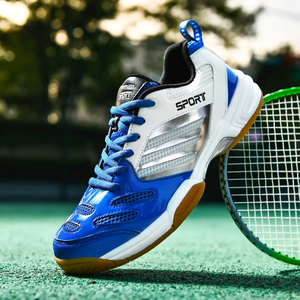
A badminton shoe withstands lunges, jumps, and pivots on wood floors: non-marking rubber sole, low upper for ankle mobility, and lateral reinforcement against twists. At Yonex, the Power Cushion foam absorbs impact upon landing and returns some energy; the Strider Flow comes in a Wide version for wider feet, and the Cascade Accel focuses on lightness. The Aerus range, very lightweight, is aimed at fast players, and the signature line of Danish Olympic champion Viktor Axelsen targets competitors. Babolat offers its Shadow, available in Spirit, Tour, and Team according to playing level.
Frequently Asked Questions
What string and tension for a badminton racket?
Beginners play with a moderate tension of around ten to eleven kilos, which is more forgiving and less demanding on the arm; competitors go above twelve kilos for more precision. A thin string gives more feel, while a thick string lasts longer.
How to hold a badminton racket?
The universal grip is taken like a handshake, with the V formed by the thumb and index finger resting on the edge of the handle. For the backhand, slide the thumb flat onto the back of the handle. Hold the racket loosely and only grip tightly at the moment of impact.
How to serve in badminton?
The shuttle must be hit no less than one metre fifteen from the floor, according to the rules of the international federation. In doubles, the short serve, just behind the front line, is the most used; in singles, the long serve sends the shuttle deep into the opponent's court.
What grip size to choose?
The grip size is denoted by the letter G followed by a number: at Yonex, the higher the number, the thinner the grip. A G5 is suitable for medium hands and players who frequently change grips; you can thicken it with a grip cover if needed.
What is the origin of the name badminton?
The game derives its name from Badminton House, the residence of the Duke of Beaufort in Gloucestershire, where it was played in the nineteenth century by officers returning from India. The first written rules were established in England in 1877.






