
Horse equipment on clearance


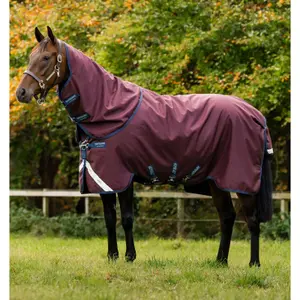


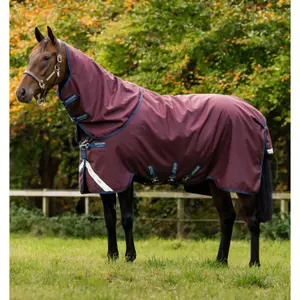


Starting at £101.72
£81.00


Starting at £283.45
£187.11


The clearance sale of horse equipment brings together end-of-line products to protect, cover, and care for your mount: closed and open fetlock boots, ankle protectors, outdoor blankets and sheets, fly rugs and masks, leather or nylon halters, girths and hygiene products, from brands like Horseware, QHP, Bucas or Harry's Horse. From flatwork to jumping, and from stable to field.
Protect and care for your horse at reduced prices.
Gaiters and fetlock boots: protecting the limbs
Gaiters protect the flexor tendons and the cannon from knocks that the horse may inflict on itself, when a hind leg reaches a front leg at a gallop or when landing after a jump. Closed gaiters, which wrap around the entire limb, are suitable for flat work, lungeing, and hacking. Open gaiters at the front, used in show jumping, protect the back of the limb while allowing the horse to feel the pole it touches, encouraging it to lift its front legs better. The shorter fetlock boots are placed on the hind legs to protect against impacts to the inside of the fetlock. Ventilated models reduce heat build-up in the tendons during exercise.
Other clearance items
Equestrian clearance also includes:
All clearance items are gathered on the equestrian page.
Outdoor rugs, sheets, and neck covers
The outdoor rug protects the horse that lives in the field or has been clipped from the cold, wind, and rain. Its fill, expressed in grams, determines its warmth: no fill for mid-season rain, one hundred to one hundred and fifty grams for a mild winter, and two hundred to three hundred grams or more for extreme cold. The neck cover, attached to the rug, extends the protection to the ears. The sheet, lightweight and breathable, made from fleece or cotton, wicks moisture away after work and protects against dust in the stable. A well-fitted rug does not rub at the withers or shoulders, even when the horse is grazing.
Fly rugs and bonnets for summer
In nice weather, flies, horseflies, and gnats harass horses both in the field and at work. The fly rug, made from fine, breathable mesh, covers the body without causing overheating; some models have a neck cover and a belly flap for areas that are more prone to bites. Certain meshes also filter some ultraviolet rays, which is helpful for light coats that are sensitive to the sun. The fly bonnet, made from crocheted fabric with fine fabric ears, fits under the bridle and prevents insects from crawling into the ears, a discomfort that makes some horses nervous at jumps. It also muffles noises for sensitive horses at competitions.
Halter, girth, and sheath care
The halter is used to tie up the horse and lead it from the field to the stable. Made from leather, it becomes more supple over time and may break under panic, preventing an tied horse from injuring itself; nylon halters resist the elements and are easy to clean. It is adjusted to fit two fingers under the noseband. The girth, which goes under the belly, keeps the rug in place when the horse rolls or gallops in the field. Finally, sheath hygiene for the gelding is done a few times a year with a mild product and gloves, to remove secretions that accumulate and attract flies.
Frequently asked questions
How do you measure a horse's rug size?
Measure with a tape measure from the centre of the chest to the point of the hindquarters, following the shoulder and flank. The length obtained, in centimetres, corresponds to the rug size; between two sizes, the larger one helps avoid chafing.
Should you rug a horse that is not clipped?
A horse with a full winter coat, in good health and sheltered from the wind, generally copes with the cold without a rug. A lightweight waterproof rug is justified in the case of prolonged cold rain, or for an older, thin horse or one that is used to being covered.
How do you wash an outdoor rug?
First, brush off the dry mud, then wash it in cold water or at thirty degrees with a mild product that preserves the waterproof treatment. Air dry it with closures secured, and store it clean and dry until the next winter.
Pony, cob, or full halter: how do you choose?
The size is based more on the head conformation than the height at the withers: pony for small heads, cob for medium horses or those with slender heads, full for large horses. The buckles on the headpiece and noseband refine the fit.
Can gaiters be left on in the stable?
No, work gaiters should be removed after the session: worn for long periods, they heat the tendons and can compress the limb. In the stable, resting bandages should be used placed on a cushion, and for the transport trailer, transport boots are used.






