
The Rider's Equipment on Clearance
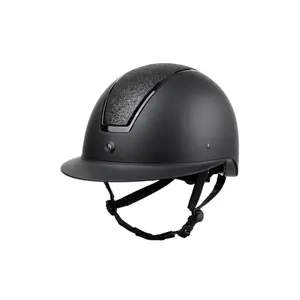


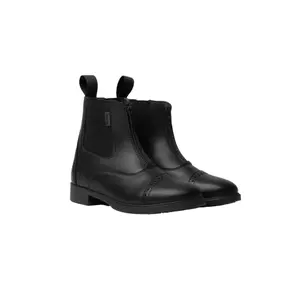


Starting at £191.73
£116.59


The rider's equipment gathered here at the end of the series protects and outfits the rider from head to toe: helmets Harry's Horse and Horze, airbag vests Helite and Swing, back protectors, boots and half-chaps Horze, Ariat, QHP and Horka, competition jackets, trousers, gloves, and stable jackets. Adults and children will find everything they need for daily riding as well as for competing.
Get equipped from head to toe, for a more reasonable price.
Riding helmet: standards and replacement
The helmet is the basic protection for riders, mandatory in federal competitions. It must carry the CE marking and meet the European standard dedicated to riding helmets, or the more demanding VG1 certification, which includes penetration and fall tests on uneven surfaces. The models Harry's Horse and Horze, with smooth, velvet, or glittery shells for competitions, share this safety foundation. It should be replaced after any impact fall, even without visible cracks, as the inner foam only absorbs energy once. When well-fitted, it stays on the head without a chin strap when leaning forward, without squeezing the temples.
Other end-of-line products
The riding clearance also includes:
- Children, boots, helmets and junior trousers.
- Shoes.
- Accessories.
- Horse, saddle pads, blankets and care products.
- Stable/Pre.
- Dog.
All end-of-line products are gathered on the riding page.
Airbag vest and back protection: two complementary protections
The back protection, like that from Harry's Horse, is a foam shell that continuously protects the back and chest; the European standard classifies it into three levels, with level three usually required for cross-country. The airbag vest, like the Helite Zip'In or Swing models, remains flat while the rider is in the saddle: connected to the saddle by a strap, it inflates in a fraction of a second when the rider separates from it during a fall, thus protecting the neck, back, and chest. Both complement each other: in international eventing, the airbag is worn over a back protector. After activation, the cartridge should be replaced before getting back on.
Boots, shoes and chaps: outfitting the rider
High boots are chosen based on shoe size, but especially the circumference and height of the calf, measured while sitting with a bent leg. Made of leather, like the Ariat Palisades, they conform to the leg and slightly sag at the ankle over the first few weeks; synthetic ones remain stiffer but can be easily cleaned with a damp sponge. Shoes, being shorter, combined with mini-chaps, are suitable for both the stable and riding. For winter, lined boots, like the Horka Thermo, or fur-lined Black Fox shoes keep feet warm during care routines. A pronounced heel is essential: it prevents the foot from slipping through the stirrup in case of a fall.
Competition attire and stable clothing
In competitions, regulation attire includes a competition jacket, a white or light shirt or polo, light riding trousers, and boots, or shoes with mini-chaps of the same color. Competition jackets by QHP, Harry's Horse or Imperial Riding, made from stretch technical fabric, leave the shoulders free for jumping. Daily, the riding trousers are characterized by their knee patches, made of silicone or fabric, which help grip the saddle inside the knee, or along the entire thigh in full grip versions, like the Horze Dea leggings. Gloves, like Ariat Tek Grip, and a stable jacket complete the outfit for long days spent at the stable.
Frequently asked questions
What size riding helmet for a child?
Measure the head circumference one centimeter above the eyebrows and choose the corresponding size, never larger in anticipation of growth. A helmet with an adjustment wheel fits a child's head better and can tighten as they grow.
How to care for leather riding boots?
After each session, brush off mud and manure, then clean the leather with glycerine soap. Regularly nourish it with a suitable balm or grease and dry the boots away from a radiator, ideally on boot trees.
How to choose the size of riding trousers?
Riding trousers should fit close to the body, without creases inside the knee or below the calf, where even the slightest fold rubs against the saddle. Check the size while sitting with bent legs, as the fabric pulls more when in the riding position.
What clothing to wear for horse riding in winter?
Layer several items: a technical top, a short jacket or down jacket that doesn’t hinder riding, and insulated thermal trousers. Lined gloves and fur-lined boots complete the outfit, as hands and feet can get cold quickly.
Can you ride a horse in trainers?
This is highly discouraged: without a heel, the foot can slip through the stirrup, and the rider risks being dragged in case of a fall. Boots or low-heeled shoes with a smooth sole are the minimum for safe riding.






