
Handball balls on clearance


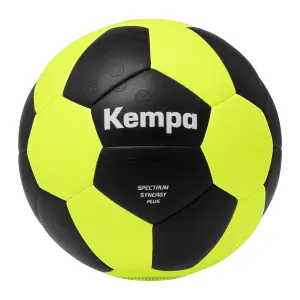


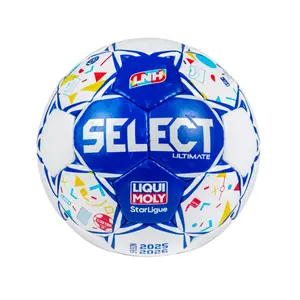


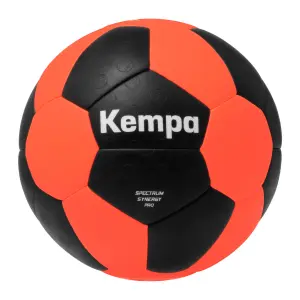


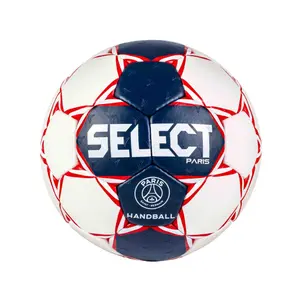


The clearance sale handball balls brings together end-of-line balls for everyone of all ages: match balls Molten and Kempa, training balls Select and Kempa, balls Erima, Hummel Classic for kids, and supporter versions in the colours of the Champions League, LNH and LFH. It's a great way to refresh a club's ball bag, equip a handball school or give a competition ball to a fan.
Equip a club or a player, for a softer price.
From baby-hand to seniors: what size according to age
The international federation sets four sizes of balls, assigned according to the age and gender of the players. The size three, measuring 58 to 60 centimetres in circumference and weighing 425 to 475 grams, is for men from the age of sixteen. The size two, measuring 54 to 56 centimetres, is used by women and girls from the age of fourteen, as well as boys aged twelve to sixteen. The size one, measuring 50 to 52 centimetres, is suitable for girls aged eight to fourteen and boys from eight to twelve years old. The size zero, measuring 46 to 48 centimetres, is for children under eight and beginners of all ages.
The other clearance items
Handball clearance also includes:
- Shoes.
- Textiles.
- Equipment, knee pads and resin.
- Supporter.
- Club Space.
All clearance items are gathered on the handball page.
Match ball or training ball
The match ball prioritises touch and shape retention. The Molten D60, in its Compet D60 Pro version, or the Kempa Spectrum Synergy Plus offer a precise grip and maintain their roundness after hundreds of shots. The training ball focuses on durability: the Select Mundo, the Kempa Leo, or the Select Solera withstand repeated sessions, shots against walls, and more abrasive surfaces. At Kempa, the Spectrum Synergy range spans from the Primo, for beginners, to the Plus, for competition. The Erima Magic and Flash balls, or the Hummel Classic Energizer, complete the offer for clubs.
Balls in the colours of the LNH, LFH, and the Champions League
The balls from major competitions come in a supporter version, featuring the design of the official ball and a construction suitable for leisure play. They showcase the colours of the LNH, the French men's league, of the LFH, its female equivalent, or the Champions League of the EHF, the top European club competition, for which Select provides the ball. The Danish brand Select, founded in 1947 by Eigil Nielsen, a former goalkeeper of the Danish football team, has made handball one of its specialties. These balls also make a popular gift for young members who support their favourite club.
Resin or no glue play: grip and maintenance
A significant part of competitive handball is played with resin, which enhances grip and allows for one-handed passes and feinting. However, many gyms prohibit it because it sticks to the floor: one then opts for a ball designed for no glue play, with a more gripping surface. International rules also stipulate that for this game, the balls are slightly smaller and lighter than standard balls. For maintenance, resin is removed with a specific cleaner after each session, before it hardens, and pressure is checked before playing, to the value indicated near the valve.
Frequently asked questions
How many balls should a handball club have?
A club primarily equips itself with durable training balls, in sufficient numbers so that each player has one during drills, and then some higher quality match balls. Care is taken to choose the right size for each age category.
At what pressure should a handball be inflated?
The recommended pressure is generally between 0.4 and 0.6 bar, but it is the value indicated by the manufacturer near the valve that is authoritative. If overinflated, the ball becomes hard and bounces too much; if underinflated, it loses its shape and accuracy.
How to inflate a handball without damaging it?
Moisten the needle with a bit of water or glycerine before pushing it straight into the valve, then inflate gradually while monitoring the gauge. A dry needle or one inserted at an angle can damage the valve and cause leaks.
What is a size 00 handball?
It is a ball even smaller than size zero, designed for toddlers in baby-hand and early handling. Often made of foam or soft rubber, it can be grasped by a child's hand and does not hurt upon receiving.
How to store handballs?
They are stored in a bag or a breathable net, away from direct sunlight and heat, which can deform the surface. For a long break, they are slightly deflated to relieve the seams, then reinflated to the correct pressure before use.






