
Karate and taekwondo belts on clearance
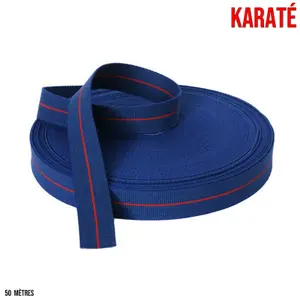
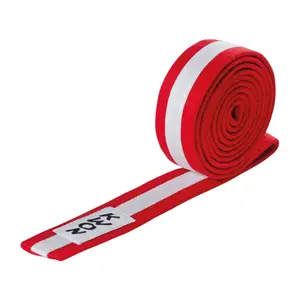
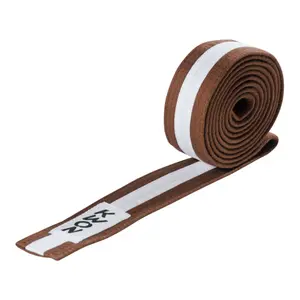
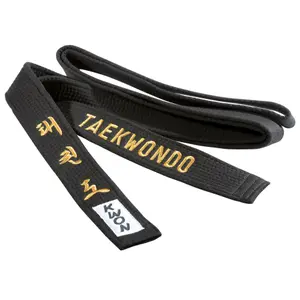
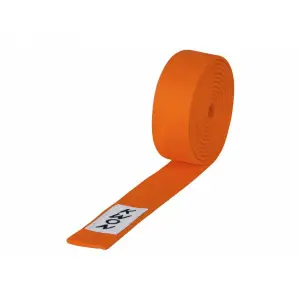
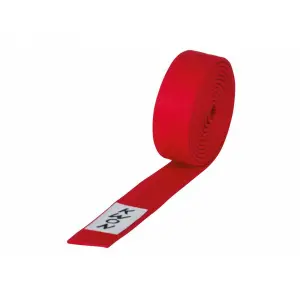
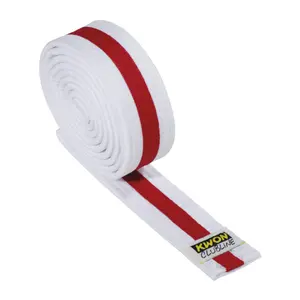
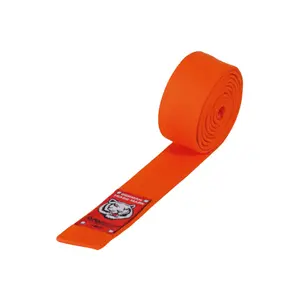
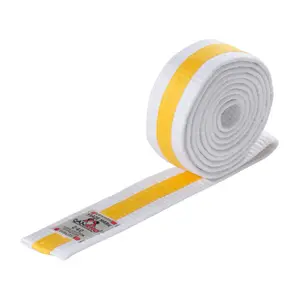
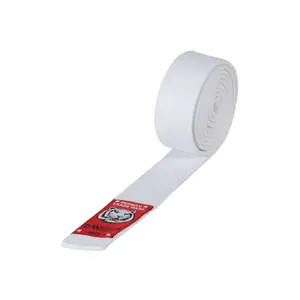
The karate and taekwondo belts at the end of the series accompany the practitioner's journey, from the white belt of the first lesson to the embroidered belts of the black belts. Kwon, one of the oldest suppliers recognized by World Taekwondo, and Danrho offer solid, bicoloured, and Velcro belts for children, while the rolls from Metal Boxe and Sporti allow clubs to cut each belt to the right length.
Marking each grade, for a softer price.
From kyu to dan: the origin of karate belts
Colour belts didn’t exist in traditional Okinawan karate. They came from Jigoro Kano's judo, which already distinguished its students by the kyu and dan ranks. Based in Tokyo, Gichin Funakoshi adopted this system and awarded the first black belt ranks in karate to seven of his students on 12 April 1924. Intermediate colours then multiplied to more frequently mark practitioners' progress. In France, the most common order goes from white to black, passing through yellow, orange, green, blue, and brown, with each club following the guidelines of its federation.
The other clearance items
Karate and taekwondo clearance items also include:
All clearance items are gathered on the karate and taekwondo page.
Gup and poom: the unique progression in taekwondo
Korean taekwondo counts its colour grades in gup, from the tenth to first, before the first dan exam. Young people who achieve a black belt before the age of fifteen receive a poom rank, symbolised by a half-red, half-black belt, which is converted to dan once they reach adulthood. Taekwondo belts are also distinguished by their width, usually four or five centimetres, like the Kwon models. The embroidery most often displays the name of the practitioner on one side and their club or rank on the other, in Latin letters or in hangeul, the Korean alphabet.
Rolls and Velcro belts to equip a club
For a club welcoming dozens of children each new term, the belt roll remains the most flexible solution: the teacher cuts the desired length for each student, then reinforces the ends to prevent fraying. The Sporti and Metal Boxe rolls, a brand founded in Toulouse in 1999, come in several colours, including one with a trim indicating an intermediate grade. For the youngest, the Velcro belt Kwon secures without a knot and avoids re-tying the belt for each exercise, while the two-colour belt Danrho, white and yellow, rewards a step completed between two colours.
Cotton, length and washing of the belt
A martial arts belt is chosen first by its length, which depends on the waist size: it wraps around the body twice, with its ends dropping around mid-thigh when tied. Manufacturers indicate this in centimetres, with a correspondence according to the practitioner’s size. The thick, double-stitched cotton, which is a bit stiff at first, softens over time with training and holds the knot well. A new belt should be washed cold and separately the first time, as the dye from dark colours may bleed onto white karategi or dobok. Traditionally, many practitioners avoid washing their black belt, as wear and tear witness to years of practice.
Frequently asked questions
How long does it take to move from one belt to another in karate?
Colour ranks are assigned by the club teacher, based on each person's progress: it often takes several months between two belts for adults. From the black belt onwards, dan promotions are under the federation’s jurisdiction and require a minimum waiting time between grades.
How to get your taekwondo belt embroidered?
Embroidery is done on a new belt, either by a specialised embroiderer or by ordering a model designed for that purpose. You specify the text for each end, name, club or rank, and the desired alphabet. It’s best to check the spelling in hangeul with your teacher before giving the go-ahead.
How to store your martial arts belt?
After training, let the belt air dry, then fold it in half and roll it up on it-self or hang it on a hook. If stored wet at the bottom of a bag, it will take on a sweaty smell and wear out more quickly.
What to do if your belt comes undone during training?
A new belt, still stiff, slips more easily: tighten the flat knot by pulling firmly on both ends, which should be the same length. A belt that’s too short or too long doesn’t hold well, and the right length often solves the problem.
How many dan are there in karate?
Most karate federations have ten dan beyond the black belt, inherited from Jigoro Kano's system. The first are obtained through a technical exam, while the highest rewards decades of practice and teaching.






