
Karate and taekwondo gloves on clearance
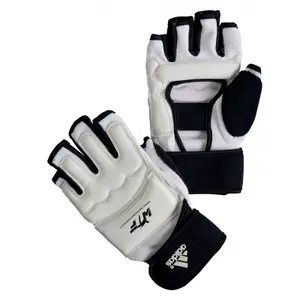
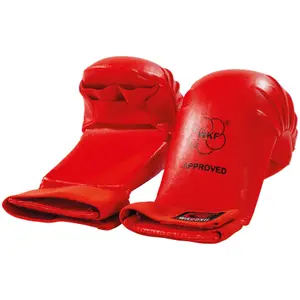
The clearance sale of karate and taekwondo gloves features combat gloves from discontinued ranges: karate gloves Mizuno, gloves Wacoku approved by the World Karate Federation with thumb protection, competition gloves Kwon and taekwondo mitts Kwon and adidas meeting World Taekwondo standards. These lightweight protections keep the hands safe during kumite without hindering grabs and blocks.
Protecting your hands during kumite, at a gentler price.
Kumite gloves: thin, open and approved
In karate, kumite gloves, used for fighting, are thin and open at the fingers: they protect the knuckles and the back of the hand while allowing you to grip the karategi and block attacks. Karate controls its strikes, and the glove is meant to absorb the residual impact rather than to hit hard. In official competitions, the WKF, a global federation founded in 1970 under a different name and renamed in 1993, requires approved gloves. The Wacoku, a WKF approved glove, covers the thumb to limit sprains during blocks; the Mizuno glove follows this fitted cut, and the Kwon Competition is used for both training and competition.
Other clearance items
The karate and taekwondo clearance also includes:
- Karategi.
- Belts.
- Protective gear, shin guards, foot guards and helmets.
All clearance items are gathered on the karate and taekwondo page.
Red or blue: the colour of the fighter
In karate competition, each fighter is assigned a colour: aka, red, and ao, blue. The belt and gloves must match this colour so that referees can award points without confusion. A competitor may be called to either team, so they need to have a pair of red gloves and a blue pair. Karate made its Olympic debut in Tokyo in 2021, featuring kumite and kata events. In kata, the karateka competes bare-handed: gloves are only used for combat and training, both in clubs and competitions.
Taekwondo mitts: protecting the hands in a martial art of legs
Taekwondo, an Olympic discipline since the Sydney Games in 2000, mainly scores points with kicks, but the hands continuously block opposing kicks and deliver punches to the body protector. The mitts protect the knuckles and the back of the hand while keeping the fingers free. In competitions governed by the World Taekwondo federation, formerly known as WTF and renamed in 2017, open-finger approved gloves are mandatory: the Kwon WT and adidas mitts meet this requirement. Their thin foam and wrist closure provide a secure fit throughout the fight.
Size, fitting and hygiene of combat gloves
Karate gloves and taekwondo mitts are chosen according to the hand circumference, measured at the knuckles, ranging from XS for children to XL. The glove should wrap the closed fist without compressing the fingers or leaving any movement at the thumb or wrist. You try it on with a closed fist and then an open hand: a glove that's too big shifts on the hand while grasping. After each session, it should be aired out rather than left enclosed; wipe the surface with a damp cloth and a disinfectant spray, avoiding machines or radiators, which can crack the covering and compress the foam.
Frequently asked questions
Do you need gloves to train in karate?
No, for technical work and kata, you don’t. As soon as you practice kumite, even in light randori, gloves protect the hands and the partner, and many clubs require them from children.
What’s the difference between a karate glove and a taekwondo mitt?
Both are thin and leave the fingers free, but each complies with its federation's regulations: WKF for karate, World Taekwondo for taekwondo. In competitions, they are not interchangeable.
What karate gloves are suitable for a child?
Choose a small size, XS or S depending on the width of the hand, with a simple closure that they can adjust themselves. A glove that protects the thumb helps to reduce minor sprains during blocks.
How long does a pair of karate gloves last?
With two combat sessions per week, a pair often lasts one to two years. Compressed foam, a cracked covering or a fastening that no longer holds indicates it needs replacing.
Are WKF approved gloves mandatory in clubs?
No, in training, any suitable karate glove is acceptable. WKF approval is only required in official competitions, where you then need a red pair and a blue pair.






