
Padel rackets on clearance


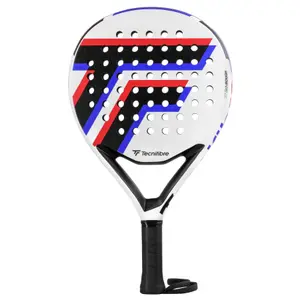
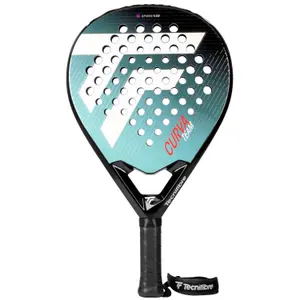


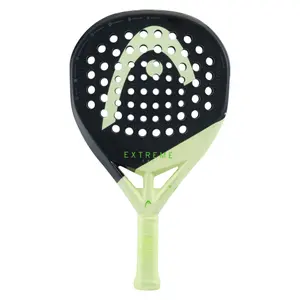


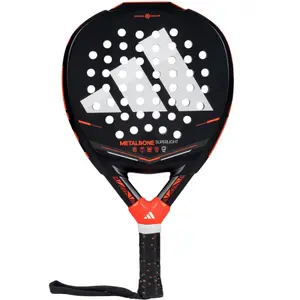
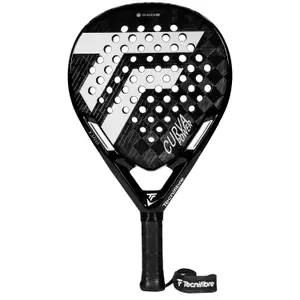
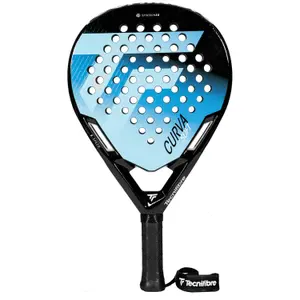
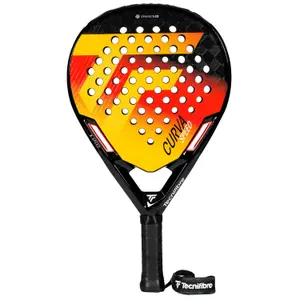
The padel rackets gathered here in the end of series range from beginner-friendly models to the signature rackets of the top players on the circuit: Nox by Agustín Tapia and Edu Alonso, Head Coello and Extreme, adidas Metalbone, Tecnifibre Wall Master and Curva, Bullpadel, Babolat, and Wilson. Shapes, weights, and materials are available for every level, in adult, women’s, and children’s versions.
The racket from a previous generation, at a more affordable price.
What racket shape to choose based on your play style
The shape of a padel racket alters its ideal impact point. Round, it keeps the weight close to the handle and offers a wide, low hitting area: it forgives off-centre balls and is suitable for beginners as well as defenders who play at the back of the court. With a teardrop shape, it raises the balance slightly to combine control and power, a compromise appreciated by regular players who switch roles. In a diamond shape, it concentrates the mass towards the head, boosting the smashes and bandejas of attackers, like the adidas Metalbone of Ale Galán, at the cost of a narrower hitting area and a more demanding action for the arm.
The other clearance items
The padel clearance also includes:
- Shoes.
- Textiles.
- Accessories, balls, overgrips, and protective gear.
- Bags, padel bags.
All clearance items can be found on the padel page.
Carbon or fiberglass: the hitting surface
The hitting surface covers the core on each side. Fiberglass, being flexible, deforms upon impact and returns the ball effortlessly: ideal for casual play and for protecting the arm. Carbon, which is stiffer, transmits energy better and increases precision. The number followed by a K indicates how many thousands of filaments make up each strand of braided carbon: a weave of twelve thousand or ten-eight thousand filaments, like those on the Nox Ventus or Genius, gives a firmer and more responsive face than a weave of three thousand, but requires a strong arm. For a beginner racket, fiberglass remains the most comfortable choice.
Weight, foam core, and regulatory dimensions
The weight of a padel racket usually ranges between three hundred and fifty and three hundred and eighty-five grams. Lighter versions, such as the adidas Cross IT Team Light and Metalbone Team Light, the Nox Ventus Hybrid Lite, or the Wilson Accent LT, shave off a few grams to ease strain on the elbow and are suitable for lighter players. The foam core, more or less dense, affects the feel: a soft foam makes it easy to hit the ball and absorbs vibrations, while a hard foam requires more force but returns the ball at higher speed. The international regulations limit the racket to a length of forty-five and a half centimetres and a thickness of thirty-eight millimetres.
Signature rackets and junior rackets
Brands entrust their flagship ranges to the best players on the professional circuit. Nox showcases the Genius of Agustín Tapia and the Ventus of Edu Alonso, Head does the Coello for Arturo Coello, and Babolat features the Technical Viper of Juan Lebrón. A signature racket is not reserved for experts: each range often comes in an Attack version, which is more powerful, and a more manageable or lighter version. For children, a junior racket, like the Head Speed junior, is shorter and lighter, allowing for a clean stroke without straining the wrist. The lanyard, mandatory, must always go around the wrist, regardless of the player's age.
Frequently asked questions
How to hold a padel racket?
The continental grip, holding the handle as if hammering a nail, is used for almost all shots, from forehands to volleys. One holds the handle without tensing the forearm, which allows the wrist to stay free to add spin to the ball.
What padel racket for a tennis player?
A tennis player often seeks power, but benefits from starting with a round or teardrop racket, which is more forgiving. Padel play is based on control and the walls: the diamond racket will come once positioning has been mastered.
How long does a padel racket last?
For two or three matches a week, a racket maintains its qualities for about a year. After that, the foam loses its responsiveness, and the ball comes out slower; any crack in the frame or a sunken face calls for replacement.
How to protect your padel racket?
Store it in an insulated cover, away from the heat of a car in the full sun, which can weaken the foam. An adhesive frame protector absorbs shocks against walls and the floor, the main cause of chips on the edges of the racket.
Rough or smooth padel racket: what’s the difference?
A rough surface, with a gritty feel, grips the ball more and makes it easier to produce cuts and topspins. A smooth surface offers a more direct hit; the texture wears down over time, gradually reducing the spin imparted to the ball.






