
Padel: the indoor sales




Starting at £325.17
£211.36
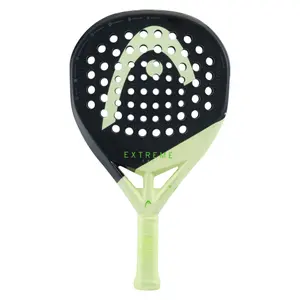


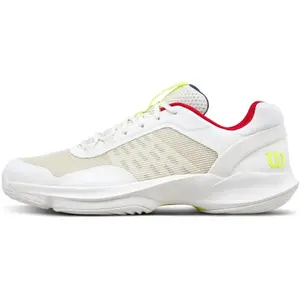


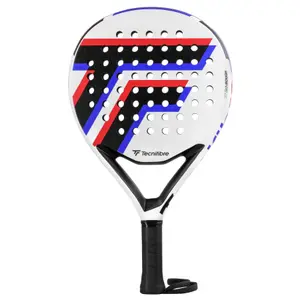
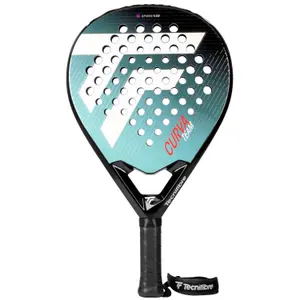
The Padel sales bring together equipment for players, from beginners to competitors: rackets Nox signed by Agustín Tapia and Edu Alonso, Tecnifibre Wall Master and Curva, Head Speed and adidas Metalbone, shoes Head Motion Pro and Sprint Pro, Joma Slam, balls Wilson, Head, Tecnifibre and Dunlop, bags Head and Cuera, protections Starvie and overgrips.
Get equipped for padel at discounted prices.
Round, drop or diamond: the shape of the racket
The shape of the racket head determines its character. The round shape, with its balance point close to the handle, offers a large hitting area and reassuring control: it is the shape for beginners and defensive players. The diamond shape, with a high balance, concentrates the mass towards the head to provide power for smashes, but is less forgiving on off-center hits: the Attack versions of the Nox rackets designed by Agustín Tapia and Edu Alonso are aimed at this offensive style of play. The drop shape, like the Nox Ventus Hybrid, balances the two and suits the versatile player who is progressing.
Other indoor sales
Indoor sales also include:
All indoor sales are gathered on the indoor page.
Carbon, EVA foam and weight: the inside of the racket
A padel racket does not have strings: its solid face, with holes, covers a core made of EVA foam or softer rubber. A hard EVA returns the ball accurately for players who hit hard, while a soft rubber makes it easier to hit the ball at moderate speed, taking care of the arm. Faces made of carbon are distinguished by their weave: the twelve K designation refers to strands of twelve thousand filaments, as seen on the Nox Ventus and Genius. The weight usually revolves around three hundred and sixty grams: a Lite version, like the Nox Ventus Hybrid Lite, which is lighter, spares the shoulder and elbow.
Chevron sole and padel shoes
Padel is played on a synthetic grass surface covered with sand, a slippery surface that requires specific shoes. The chevron sole grips the sand without locking the foot during pivots: this is the design of clay court shoes, hence the Clay version of the Head Sprint Pro. The lateral support aids side movements, which are common near the walls. The Head Motion Pro is also available with BOA lacing, a dial that adjusts the laces with a twist and loosens them with a simple press, while the Joma Slam offers a versatile alternative.
Balls, bags and frame protectors
A padel ball resembles a tennis ball but it is slightly less pressurized, for a bounce suitable for a closed court of twenty meters by ten. The Wilson Premier Speed, Head Pro, Tecnifibre X-One or Dunlop come in pressurized tubes of three balls, which maintain their bounce until opened. A ball loses its pressure after a few games: you open a new tube for each important match. The racket bag Head or Cuera, with an insulated compartment, protects the carbon from the heat of a car boot. Finally, a protector Starvie stuck on the frame absorbs shocks against the glass and the floor.
Frequently asked questions
Where did padel come from?
Padel was invented in 1969 in Acapulco, Mexico, by Enrique Corcuera, who surrounded a small court with walls due to lack of space for a tennis court. The game then developed in Spain and Argentina before spreading throughout Europe.
At what age can you play padel?
Padel can be learned from the age of six or seven with a lighter and shorter racket, suited to a child's hand. The smaller court and the walls extending rallies allow players of all ages to have fun from the very first session.
Which muscles does padel work?
Movements and lunges work the thighs and glutes, torso rotations strengthen the abs, and strikes engage the shoulder and forearm. Warm up your shoulder and wrist before playing to limit soreness.
How do you change the overgrip on a padel racket?
Remove the old overgrip, then wrap the new one starting from the bottom of the handle, overlapping each turn by about a third of its width. Finish with the adhesive tape provided, and change it as soon as it becomes smooth or slippery.
Can you play padel in running shoes?
It is not recommended: their sole slips on the sand of the synthetic grass and they lack lateral support. The risk of sprains increases during rapid direction changes near the walls.






