
Kettlebells for weight training
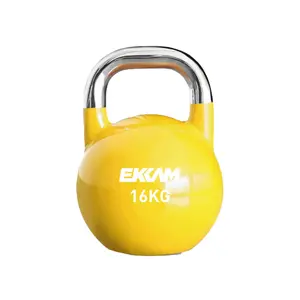
Our Kettlebells page brings together our tips for choosing and using these handle weights: cast iron kettlebells, vinyl coated or competition steel ones, selecting the weight according to your level, basic exercises like the swing, goblet squat or get-up, and safety rules for training at home.
One ball, one handle, the whole body.
A weight from Russia
The kettlebell, or girya in Russian, is a cast iron ball topped with a handle. Used in Russia since the 18th century by merchants to weigh goods, and later by strongmen at fairs, it has become a very popular training tool. Its centre of gravity, offset from the hand, makes it a dynamic weight, perfect for swinging movements that engage the whole body, in both strength and cardio.
The rest of weight training
Weight training also includes:
All weight training can be found on the weight training page.
Cast iron, vinyl or competition
The classic cast iron kettlebell increases in size with its weight. The kettlebell covered in vinyl or neoprene protects the floor and comes in different colours according to the weight, making it convenient for home use. The competition kettlebell, made of hollow steel, maintains the same size regardless of weight, from eight to forty-eight kilos: the technique remains the same as you progress. Traditionally, the weight is also expressed in pounds, an old Russian unit of about sixteen kilos.
Starting safely
To start, one often chooses eight to twelve kilos for women and twelve to sixteen kilos for men, depending on their condition. The basic movement, the swing, is done by pushing with the hips, keeping the back straight, and not pulling with the arms. The goblet squat, with the kettlebell held against the chest, and the get-up, which involves standing up from the floor with an outstretched arm, round out the workout. One trains on a clear floor, away from furniture, and learns the movements with a coach.
Good deals
Good deals can also be found in good plans, promotions, clearance, sales, and Black Friday. The new arrivals showcase the latest collections, and items shipped in 24h are prepared and sent out within 24 hours. The highlights of the year follow a stable sequence: the Black Friday at the end of autumn, the end-of-year holidays, the winter sales, the French Days in spring, followed by the summer sales and back to school.
Frequently asked questions
What kettlebell weight should I start with?
A woman often starts with eight kilos and a man with twelve or sixteen kilos for the swing. For overhead movements, a lighter weight is chosen, and one masters the technique before increasing the weight.
Where does the kettlebell come from?
The kettlebell, or girya in Russian, has been used in Russia since the 18th century by merchants to weigh goods, then by strongmen at fairs, before becoming a very popular training tool.
What exercises can I do with a kettlebell?
The swing, goblet squat, and get-up are the three basic exercises. They work the legs, glutes, back, and core, combining strength training and cardio.
Cast iron kettlebell or competition: what’s the difference?
The cast iron kettlebell increases in size with the weight. The competition kettlebell, made of steel, maintains the same dimensions regardless of the load, ensuring a consistent position from one model to another.
Why is the swing so effective?
The swing is a ballistic movement driven by a powerful hip extension. It strengthens the entire posterior chain, glutes, hamstrings, and back, while elevating the cardio in a short amount of time.






