
Kids' golf putters
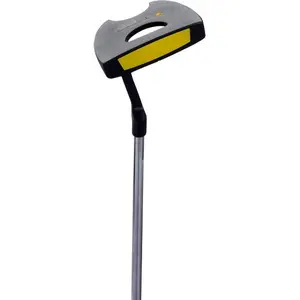
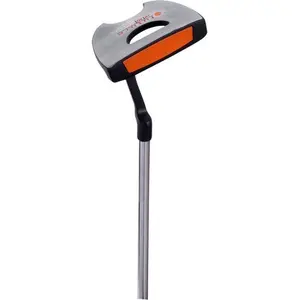
Our page on golf putters for kids helps you choose the first club that most young golfers use: the right length for their size, blade or mallet head, a weight that helps with control, a grip for small hands, and alignment lines. A putter that fits them establishes the right posture on the green and makes every putt scored more rewarding.
The first club, the one that makes you love golf.
What length of putter according to the child's size
The length of the putter is chosen based on the child's height and posture, never just their age. At address, they lean slightly from the hips, their arms hang freely, and their eyes are positioned over the ball or just inside the line of play. The top of the grip should then meet their hands without them having to straighten up or slide their fingers along the shaft. A putter that is too long forces the elbows to spread and to stand upright, which misaligns their gaze; if it’s too short, it causes them to bend their back. Manufacturers' charts, based on height ranges, provide a first guide to check on a putting mat.
The rest of the bag
Children's clubs also come in:
All clubs are gathered on the children's clubs page.
Blade or mallet head for a young player
The mallet head, wide and deep, places part of the weight away from the face: it spins less on off-center hits and keeps the ball better on its line, an advantage for a child whose impact point is still varying. Its alignment lines, often marked on the top, also help with aiming. The blade head, thinner, offers more feel and allows the face to open and close more freely: it is suited for more advanced children with a regular swing already. For a beginner, the mallet remains the most reassuring; one switches to the blade when the child seeks more touch on longer putts.
Grip and weight to control putts
The grip of a putter can have a flat section on top: this is the only club for which the rules of golf allow a non-circular grip, helping the child to place their thumbs in line with the face. Its diameter must remain suitable for small hands, allowing a relaxed grip that lets the shoulders control the motion. The weight of the head influences the control: a slightly heavier head swings like a pendulum, making the length of putts more consistent, while a head that is too light encourages the child to hit with their wrists. The right putter feels heavy at the bottom, light in the hands.
Good deals
Good deals can also be found in good deals, promotions, clearance, sales, and Black Friday. The new arrivals showcase the latest collections, and items shipped in 24h are prepared and sent within 24 hours. The yearly highlights follow a stable order: Black Friday in late autumn, the year-end holidays, the winter sales, the French Days in spring, then the summer sales and back to school.
Frequently Asked Questions
Can a toddler play with a real putter?
From the age of three or four, a short and light putter allows play on a mat or practice green. Putting is often the entry point to golf for younger kids, as the movement is simple and the result immediate.
How can I teach a child to hold their putter properly?
Place both palms facing each other on the grip, with thumbs resting on the flat top, without gripping tightly. The motion starts from the shoulders, like a pendulum, with the wrists remaining passive throughout the movement.
Can an adult putter be cut down for a child?
It can be shortened, but the head then becomes too heavy compared to the shaft, which affects the balance. A junior putter, designed for their size and strength, provides better feel.
Does a left-handed child need a left-handed putter?
Yes, if the child stands left-handed facing the ball, they need a left-handed putter. Some symmetrical-headed putters work for both orientations, which is a practical solution for beginners.
How can I train a child in putting at home?
A putting mat or a simple hallway with a glass placed on the floor is enough for practice. Aiming at targets at different distances teaches distance control while having fun, just a few minutes a day.






