
Children's golf wedges
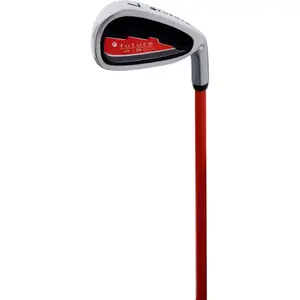
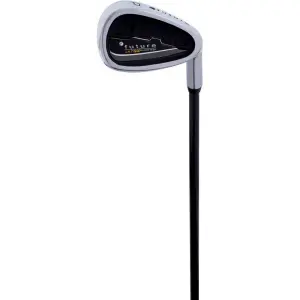
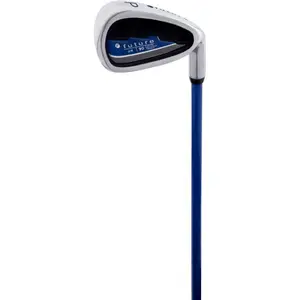

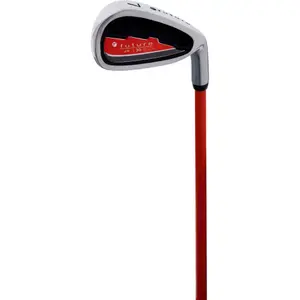
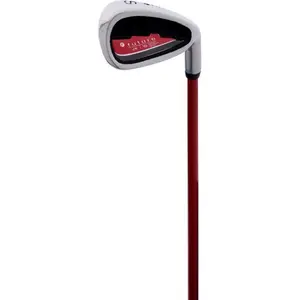
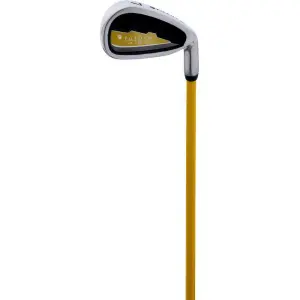
This page helps to choose golf wedges for kids: junior pitching wedge and sand wedge, suitable loft and bounce, length according to height, and flexible shaft. Our tips also show how to learn approaches, chips, and bunker exits, these shots around the green that can lower a child's score long before they gain distance.
Learning the short game from a young age.
Pitching wedge and sand wedge: two clubs, two roles
The pitching wedge, often marked as P or PW, extends the iron series: with a loft generally between forty-four and forty-eight degrees for adult models, it is used for long approaches and chips that roll a lot. The sand wedge, which has a wider face, around fifty-four to fifty-eight degrees, lifts the ball high and stops it quickly. It was popularised by Gene Sarazen, who won the British Open in 1932 with a widened sole he designed. For a child, the pitching wedge often appears in junior half-sets; the sand wedge is added when they start playing on the course and its bunkers.
The rest of the bag
Children's clubs also include:
All clubs are gathered on the children's clubs page.
Bounce, or how the sole glides in the sand
The bounce is the angle formed between the leading edge of the clubface and the lowest point of the sole. The higher it is, the more the sole bounces off the ground instead of sinking into it. This is what allows the sand wedge to glide through the sand under the ball and project it out of the bunker, as long as you hit the sand a few centimetres behind it, with the face slightly open. A high bounce is also suitable for soft turf and steep swings, which are common for children who hit down hard on the ball. A low bounce, on the other hand, adapts better to firm ground and players who sweep the ground. For a beginner, a generous bounce is more forgiving.
Approach games to learn the short game
Around the green, children progress faster by playing than by repeating. The towel game involves getting the ball to land on a towel placed on the green to learn how to choose their landing spot. The three club game has them play the same chip with the pitching wedge, a nine iron, and then a seven iron to see how the ball rolls less or more depending on the loft. In the bunker, a line is drawn in the sand and the child has to make the club enter at the line, first without a ball, then with one. These short exercises develop feel and confidence, provided they use lightweight junior wedges suited to their size.
Good deals
Great bargains can also be found in the good deals, promotions, clearance, sales, and Black Friday. The new arrivals feature the latest collections, and items shipped in 24h are prepared and sent out in 24 hours. Yearly highlights follow a consistent order: the Black Friday at the end of autumn, the holiday season, winter sales, the spring French Days, then summer sales and back to school.
Frequently asked questions
Which wedge should I buy first for a child?
The pitching wedge comes first as it serves for both rolled approaches and medium-distance lifted shots. A junior sand wedge is added when the child moves from the practice range to the course and encounters their first bunkers.
What length of wedge for a young golfer?
The junior wedge is chosen according to the child's height, just like the rest of their set: they should be able to stand in front of the ball without hunching or stretching their arms. An adult wedge that has been shortened remains too heavy in the head and too stiff for them.
How to teach chipping to a child?
The ball is placed at the centre of their feet, with hands slightly ahead, and the arms are swung like in putting, with firm wrists. Aiming at a bucket or a hoop placed on the ground makes the exercise fun and gives a clear goal for each shot.
How many clubs can you put in a golf bag?
The rules limit the bag to fourteen clubs in official play. A child often uses only six to eight, including one or two wedges, which lightens the bag and simplifies choices on the course.
What do the degrees engraved on a wedge mean?
The number engraved indicates the loft, the angle of the face relative to vertical. The higher it is, the higher the ball goes and the less it rolls: a fifty-six degree wedge sends the ball higher and not as far as a pitching wedge.






