
Badminton during the French Days


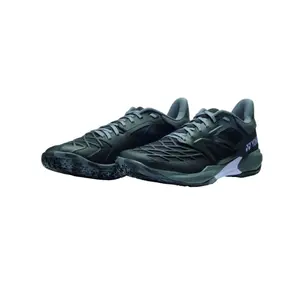
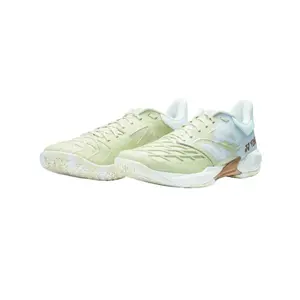


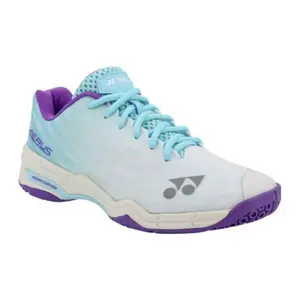


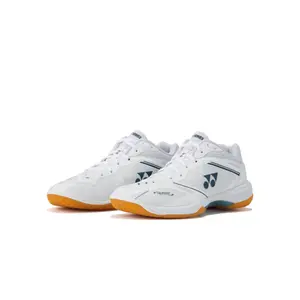
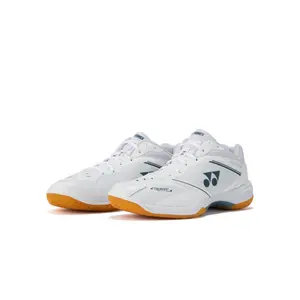


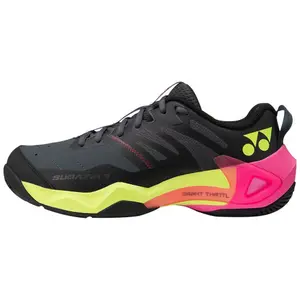


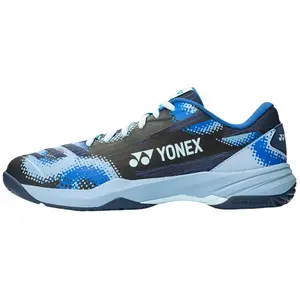
The badminton selection from the French Days outfits the player from head to racket: Yonex Nanoflare, Astrox and Isometric frames, Babolat rackets, Yonex Power Cushion indoor shoes and Babolat Shadow in men's, women's and children's sizes, tubes of shuttlecocks Yonex and Wilson, and bags Craft and Carlton to carry it all to the gym.
Get equipped for badminton at a discounted price.
Astrox, Nanoflare, Isometric: three philosophies Yonex
The three families of rackets Yonex cater to three playing styles. The Astrox range puts the weight towards the head and adds mass to the smash: it suits the player who attacks from the back of the court. The Nanoflare range, lightweight at the top, speeds up the frame in quick exchanges at the net and in defence, which many doubles players look for. The Isometric shape, almost square at the head, developed by Yonex, widens the sweet spot and reassures beginners. At Babolat, the Lyon-based brand founded in 1875, the Satelite and X-Feel complete the offer with versatile frames.
Other indoor sports
The French Days indoor also includes:
All offers are gathered on the indoor page.
Stringing and tension: setting the racket to your game
The stringing influences the game as much as the frame. The tension is measured in pounds: a moderate tension, around twenty pounds, enhances the trampoline effect and forgives off-centre strikes, while a high tension, above twenty-four pounds, provides control for fast and well-centred hits. The gauge of the string also plays a role: a thin string pops and grips the shuttlecock but breaks faster, while a thick string lasts longer. It’s recommended to restring your racket at least once a year, even without breaks, as the string loses tension over time and with heat, and the stringer advises the appropriate tension based on your level.
Badminton shoes: size, shape and wear
A badminton shoe should be chosen to fit snugly, with half a centimetre of space in front of the big toe: the foot should not slide forward during lunges at the net. The women's models, such as the Yonex Cascade Accel or the Babolat Shadow Spirit, are built on a female shape, and the children's sizes of the Yonex Strider Flow support young players. You should try on the pair with your usual sports socks. A sole that has become smooth under the forefoot no longer provides traction: it's time to replace the pair before a sprain, even if the upper still looks new.
Taking care of your shuttlecocks and grip
A feather shuttlecock lasts longer when stored in its tube, in a room that is neither too hot nor too dry. Some club players lightly moisten the inside of the tube a few hours before a tournament: the feather regains flexibility and breaks less. The speed indicated on the tube is adjusted according to the hall: a faster shuttlecock in a cold hall, slower in a hot hall or at altitude, where the lighter air causes it to fly further. As for the racket, the grip should be changed as soon as it becomes slippery; an overgrip absorbs sweat better than a smooth synthetic overgrip.
Frequently Asked Questions
How to smash harder in badminton?
The power of the smash comes from the rotation of the torso and the relaxation of the arm, not just from wrist strength. You hit the shuttlecock high, in front of you, transferring your body weight from the back leg to the front leg.
What badminton racket for a child?
A young child plays with a junior racket, shorter in length, that can be handled without putting strain on the wrist. Once they join a club, a lightweight adult racket with a slim handle, rated 5U and G5, will accompany them for several years.
How many shuttlecocks are in a tube?
Shuttlecocks are most often sold in tubes of six or twelve. The twelve tube, such as the one from Yonex Aerosensa, is suitable for club players who use several per session; the six tube is enough for casual play with nylon shuttlecocks.
Where does the name badminton come from?
The game gets its name from Badminton House, the estate of the Dukes of Beaufort in Gloucestershire, where English high society played it in the nineteenth century. The shuttlecock games, however, are much older in Asia.
Is badminton an Olympic sport?
Yes, badminton has been part of the official Olympic programme since the Barcelona Games in 1992, featuring singles and doubles. Mixed doubles was introduced in 1996, at the Atlanta Games.






