
Padel during the French Days


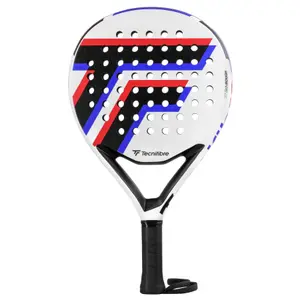
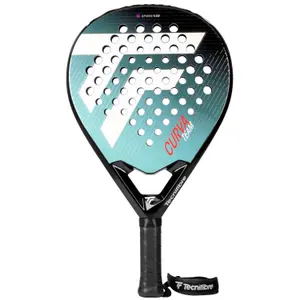


Starting at £325.17
£243.87
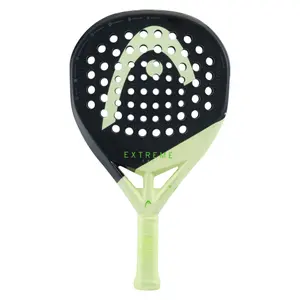


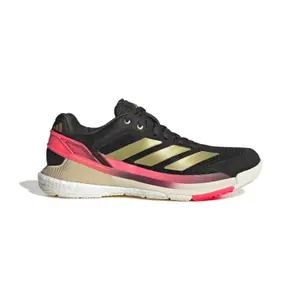

The French Days indoor focus on padel: rackets Nox signed by Agustín Tapia and Edu Alonso, Tecnifibre Wall Master and Curva, Head and adidas Metalbone, shoes Head Motion Pro and Sprint Pro, Joma Slam, balls Wilson, Head, Tecnifibre and Dunlop, bags Head and Cuera, frame protection Starvie. From the first match with friends to the club tournament, every level finds its gear.
The rising racket sport, at reduced prices.
Round, tear drop or diamond: the shape of the racket
The shape of a padel racket determines where its sweet spot is located. The round racket, with weight distributed towards the handle, offers a large hitting area and great maneuverability: it is the choice for beginners and defensive players, like the Tecnifibre Curva Soft. The tear drop shape, which is intermediate, balances control and power. The diamond shape, with weight towards the head, like the Nox Genius of Agustín Tapia or the Metalbone of Alejandro Galán, rewards smashing but requires a precise stroke. The rules limit any racket to 45.5 cm in length, 26 cm in width, and 38 mm in thickness.
Other indoor sports
The French Days indoor also includes:
All the offers are gathered on the indoor page.
Rubber, fiberglass or carbon: what makes the hit
A padel racket has no strings: it’s a solid pala, with holes, whose core made of rubber EVA or foam provides the hitting sensation. A soft rubber returns the ball effortlessly and spares the elbow; a hard rubber adds power and precision for those who hit hard. The surface made of fiberglass, which is more elastic, is suited for beginners, while the one made of carbon, being stiffer and more responsive, is for advanced players: the Nox Ventus by Edu Alonso are made from it. A rough surface, finally, grips the ball and facilitates sliced and lifted shots, which are very useful near the walls.
Padel shoes: herringbone sole and support
Padel is played on sanded synthetic grass, where a running shoe slips. The padel shoe has a herringbone sole, these zigzag patterns that grip the sand without collecting the grass, or a mixed sole for less loaded courts. The Head Motion Pro and Sprint Pro reinforce the sides of the upper to withstand lateral movements and sudden stops. The version with the BOA system of the Motion Pro replaces laces with a dial that tightens the upper evenly. The Sprint Pro Clay, designed for sandy courts, enhances grip even further.
Padel balls: pressure and lifespan
The padel ball looks like a tennis ball but differs: its diameter is between 6.35 and 6.77 cm, and its internal pressure, lower, produces a bounce that is slower, suitable for a twenty-meter by ten-meter court surrounded by walls. Balls are sold in pressurized tubes of three, like the Wilson Premier Speed, Head Pro Plus or Tecnifibre X-One. Once the tube is opened, they slowly lose pressure: a few matches are enough for them to bounce less. The Dunlop Eco, packaged to reduce waste, is suitable for regular players who often renew their balls.
Frequently asked questions
How is a point counted in padel?
The scoring follows that of tennis: fifteen, thirty, forty, game, and six games to win a set. On the professional circuit, the golden point often replaces the advantage: at forty all, the next point decides the game.
From what age can you play padel?
Children can start around six or seven years old with a lighter and shorter junior racket. The smaller court and longer rallies make the game fun very quickly, even without advanced technique.
Which muscles does padel work?
The legs and glutes, used during lunges and lateral movements, as well as the shoulders and forearms for hitting. The abs stabilize the torso during rotations and smashes.
How to protect the frame of your padel racket?
A protective strip, like that from Starvie, sticks to the top of the frame to absorb shocks against the walls and the floor. Also, store the racket in a cover, out of heat that can weaken the rubber.
What bag is good for carrying your padel gear?
A bag for rackets, like the Head CCT or the Cuera Oncourt, protects the palas in a dedicated compartment. It also keeps the shoes separate and has a pocket for the ball tubes.






