
The sneakers Saucony from the French Days
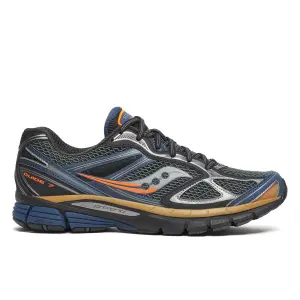


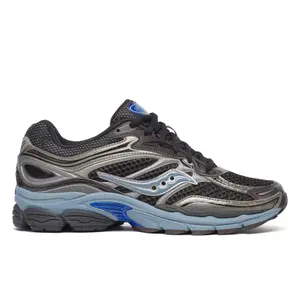
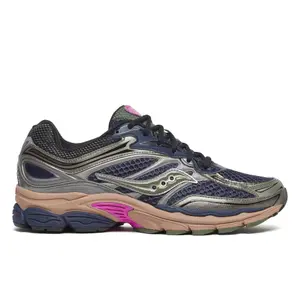


The Saucony selection of the French Days features sneakers from the brand that was founded in Pennsylvania in 1898: the Jazz with its sleek profile, the Shadow with its suede and mesh overlays, and other reissues from the brand's running archives. For men and women, these shoes born on the road are now worn in the city, available in colours ranging from neutral tones to the brightest combinations.
The American running shoes have become sneakers, now at a discounted price.
Saucony, from Kutztown to the jogging boom
Saucony was born in 1898 in Kutztown, Pennsylvania, in a factory built by the Saucony Creek, the river that gave it its name. The logo reflects this: the curved line represents the river and the three dots symbolize the rocks that dot its course. Acquired in 1968 by Hyde Athletic Industries, the brand then experienced the American jogging boom of the 1970s and 1980s, which established its reputation as a specialist in running. The models that came from this era, now reissued for everyday use, are today the most sought after, and the French Days is a chance to discover them at discounted prices.
Other brands
The French Days sneakers are also available from:
All the brands are gathered on the sneakers page.
The Jazz, a running shoe born in 1981
The Jazz was released in 1981 as a training shoe for runners, featuring a nylon and suede upper and a sole with triangular lugs that gripped both the road and trails. Its low and sleek profile, reinforced heel, and side logo make it a lightweight sneaker that's easy to wear from morning till night. The Jazz Original remains the closest to the original design, while other versions play with materials, from leather to suede, and colours ranging from subtle grey to pink or salmon. This mix of nylon and suede, light and breathable, explains its longevity in the brand's catalogue.
Shadow and Grid: cushioning from the 1980s and 1990s
Emerging in the 1980s, the Shadow was a more structured running shoe than the Jazz, designed for high mileage. Its upper combines suede overlays on a breathable mesh, and its thicker midsole provides enhanced shock absorption, making it comfortable for all-day wear. In 1991, Saucony launched the Grid technology, a network of tensioned threads in the heel that distributes impacts like a trampoline; the Grid models reissued in a lifestyle version retain the retro design and generous volumes. Bulkier than the Jazz, the Shadow fully embraces its 1980s sports shoe look.
Size, suede and mesh: choosing and caring for your Saucony
Saucony sneakers are chosen based on the length of the foot in centimetres, which is matched to the brand's size guide, relying on an American grid. The Jazz, being narrower, fits true to size; while the Shadow, which is more spacious, allows a little extra room for wider feet. The suede should be protected with a waterproofing spray right from its first outing and brushed dry in the direction of the nap with a crepe brush. The mesh can be cleaned with lukewarm water and a soft brush, never in the machine: heat and tumbling can separate overlays and distort the sole.
Frequently asked questions
Where does the brand Saucony come from?
Saucony is an American brand founded in 1898 in Kutztown, Pennsylvania, by a group of local entrepreneurs. Its name is derived from the Saucony Creek, the river that ran alongside its very first factory.
Which Saucony should I choose for a marathon?
The Jazz and Shadow sneakers are not meant for running. For a marathon, Saucony offers dedicated running shoes: the Endorphin Pro, with a carbon plate for targeting a time, or the Triumph, which is well-cushioned for comfortable finishing.
Which Saucony for a heavy runner?
A heavier runner looks for generous cushioning and good stability: the Triumph for cushioning, the Guide for arch support. The lifestyle models like the Shadow are still intended for walking.
Does Saucony make trail shoes?
Yes, Saucony has developed an off-road range, including the Peregrine, versatile and grippy, and the Xodus Ultra, more cushioned for long distances. These are technical shoes, quite distinct from the Jazz and Shadow sneakers.
What is the difference between Saucony Originals and the running line?
Saucony Originals includes lifestyle reissues, such as the Jazz, Shadow, or Grid models, designed for the city. The running line, featuring the Endorphin, Ride, or Guide, uses modern foams designed for training and competition.






