
BMX freestyle and race handlebars




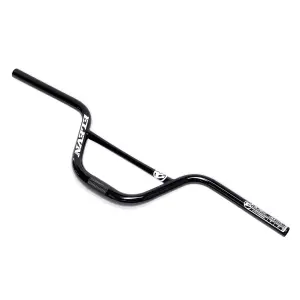
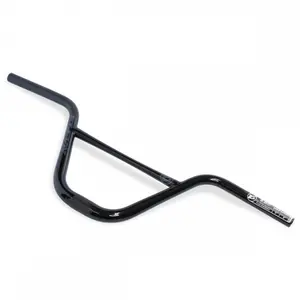
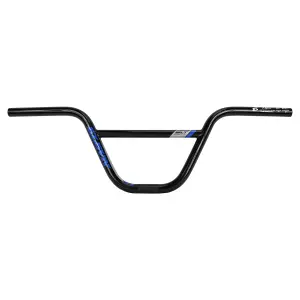


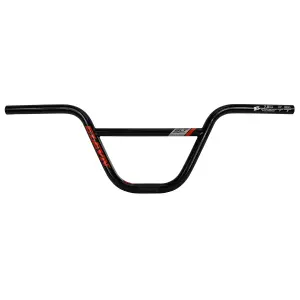


Our BMX Handlebars page brings together our tips for choosing your handlebar: height or rise, width, backsweep and upsweep angles, two or four-piece construction, chromoly steel or aluminium, depending on your size, your riding style, and your preference, from street to park and racing.
The handlebar, a signature of BMX style.
A centrepiece
The handlebar is one of the most personal parts of a BMX: it determines the position, bike control, and ease in tricks. Its U shape, with a crossbar for extra support, gives it its distinctive silhouette. In freestyle, it has to absorb landings, tailwhips, and barspins; in racing, it needs to offer a stable grip for sprints and starts.
The components
BMX components also come in various types:
All components are gathered on the peripheral components page.
The dimensions
The height, or rise, generally ranges from eight to ten inches, which is about twenty to twenty-five centimetres: a higher handlebar suits taller riders and makes the bike easier to lift, while a lower handlebar enhances control. The width, from twenty-eight to thirty inches approximately, is chosen according to shoulder width; a wide handlebar stabilises, while a narrow one eases barspins.
Angles and construction
The backsweep, the angle of the grips towards the back, and the upsweep, their angle upwards, influence wrist comfort. The two-piece handlebar, lighter, is preferred by street riders, while the four-piece bar, with support, offers more stiffness. Chromoly steel, durable and flexible, dominates in freestyle, while aluminium, being lighter, is found in racing.
Good deals
Great bargains can also be found in good deals, promotions, clearance, sales, and Black Friday. The new arrivals showcase the latest collections, and items shipped within 24 hours are prepared and sent out in 24 hours. The key events of the year follow a stable order: Black Friday in late autumn, the holiday season, the winter sales, the French Days in spring, followed by summer sales and back-to-school.
Frequently Asked Questions
What handlebar height should I choose based on my height?
The height, or rise, typically ranges from eight to ten inches in freestyle. A tall rider should choose a higher handlebar to keep their torso upright, while a shorter rider or race pilot prefers a lower handlebar, which loads the front.
What are the purposes of the backsweep and upsweep of a BMX handlebar?
The backsweep tilts the grips backward and the upsweep raises them slightly. These two angles change wrist position: a marked backsweep feels more natural, while a subtle backsweep promotes more direct handling.
Two-piece or four-piece handlebar, what should I choose?
The two-piece handlebar, with a single crossbar, is lighter and dominates freestyle. The four-piece, reinforced with additional posts, offers a classic look and greater rigidity, appreciated by heavier riders.
Is chromoly better than aluminium for a BMX handlebar?
Chromoly steel handles repeated impacts of freestyle better and bends rather than breaking suddenly. Aluminium, being lighter, is suitable for racing, where the handlebar faces fewer shocks but must remain rigid during sprints.
What width of handlebar should I adopt for BMX?
BMX handlebars usually measure between twenty-eight and thirty inches wide. A wide handlebar stabilises the bike and facilitates jumps, while a narrower one makes the bike more agile; it mainly depends on shoulder width.






