
BMX race clamps and freestyle


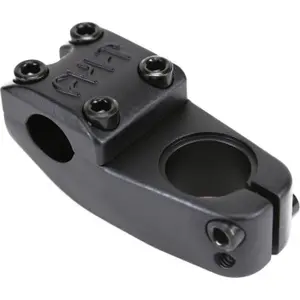


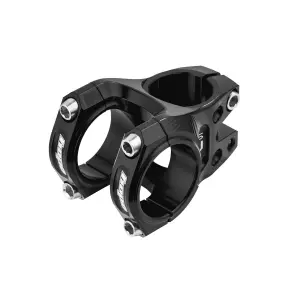
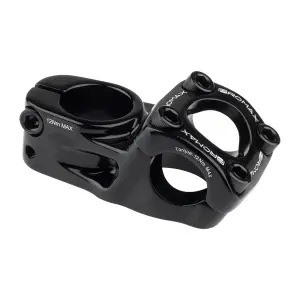
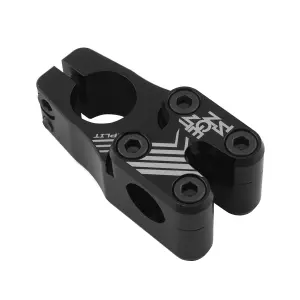


The BMX stems gathered here connect the handlebars to the forks of track bikes: the Pride Racing Cayman, machined from a block of aluminium for riders looking for stiffness, and the Insight stem designed for Mini and Junior sizes. Length, clamping type, and handlebar diameter are chosen based on the rider's size and the handlebars already mounted.
The link between the rider and their steering.
Front load or top load: where the handlebars sit
The difference lies in the position of the handlebars relative to the body of the stem. On a front load, the handlebars are clamped in front of the body by a screwed cap, keeping the front low and allowing for the handlebars to be removed without taking off the grips: this is the dominant format in BMX racing. On a top load, the handlebars sit on top of the stem and are tightened from above, raising the riding position, a common choice in freestyle or for taller riders. With the same handlebars, switching from one to the other changes the height of the hands, an aspect to check before ordering.
The other components
BMX components also come in:
All components are gathered on the peripheral components page.
Pride Racing Cayman or Insight: two stems, two styles
The Pride Racing Cayman is fully machined using computer control from a block of aluminium, with laser cuts that lighten the part without sacrificing rigidity. Its wide contact area on the handlebars, forty-eight millimetres, distributes the clamping and prevents the handlebars from rotating during sprints. It comes in clamp sizes of twenty-two point two or thirty-one point eight millimetres, and in several lengths. The Insight Mini/Junior stem is aimed at young riders: more compact, it keeps the hands close to the steering axis on Mini and Junior frames, where an adult stem would stretch the position.
Length, handlebars and steerer: dimensions to check
The length of the stem, measured from the axis of the steerer to the axis of the handlebars, usually ranges from forty-five to fifty-eight millimetres in racing: shorter for reactive steering and a rider positioned over the front, longer for stability and reach for larger riders. The clamping diameter must match the handlebars: twenty-two point two millimetres for most BMX handlebars, thirty-one point eight for oversized, stiffer handlebars adopted by many racers. For forks, a one inch one eighth steerer remains the norm.
Great deals
Good deals can also be found in great deals, promotions, clearance, sales, Black Friday. The new arrivals showcase the latest collections, and items shipped within 24 hours are prepared and dispatched in 24 hours. The key events of the year follow a consistent order: the Black Friday at the end of autumn, the holiday season, the winter sales, the French Days in spring, then the summer sales and back to school.
Frequently asked questions
How to tighten a BMX stem without damaging the handlebars?
Tighten the cap screws in a criss-cross pattern, a little at a time, until reaching the torque indicated on the stem, then check that the gap between the cap and body is equal at the top and bottom. Uneven tightening can weaken the handlebars, especially in aluminium.
Should you change the stem when a young rider grows?
A growing rider gains reach: a slightly longer stem restores a balanced position over the front. Replacing it only requires an Allen key and a few minutes, provided you keep the same handlebars diameter.
How to adjust the handlebars height with the stem?
The height is adjusted with the rings placed under or over the stem, along the steerer tube. A top load stem also raises the handlebars compared to a front load. The stem clamping must always apply over its entire height of steerer.
How to align the stem with the front wheel?
Loosen the side screws, position yourself facing the bike, front wheel between your knees, and align the stem with the rim. Adjust the headset using the cap screw, then tighten the side screws alternately.
Is an aluminium stem strong enough for racing?
Yes, a stem machined from solid, like the Pride Racing Cayman, can withstand the forces of starts and landings. However, replace it after a crash that has left marks on the body or cap, as a crack isn't always visible.






