
Disc brake callipers for mountain bikes


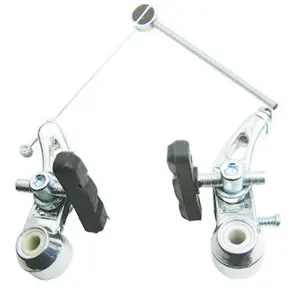
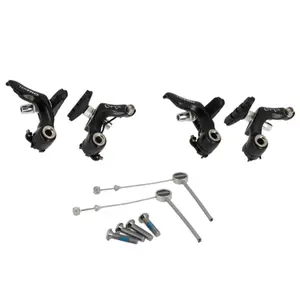


Our selection of Brake Callipers for mountain bikes features the Shimano mechanical disc calliper, front and rear, with our tips on how to choose a calliper: mechanical or hydraulic, two or four pistons, post mount or IS fitting, adapters depending on disc diameter, and adjustment.
The heart of disc braking.
Two Technologies
The disc brake caliper clamps the disc fixed to the hub using two pads. On a mechanical caliper, like the Shimano model from our selection, a cable activates the mechanism: easy to maintain, it is found on entry-level mountain bikes and city bikes. The hydraulic caliper, powered by pressurised fluid, offers more power, modulation, and automatic compensation for pad wear.
The Rest of Braking
Mountain bike braking also comes in:
All braking information is gathered on the braking page.
Mounts and Adapters
The caliper mounts to the frame and fork according to two main standards: the post mount, where the caliper screws directly onto two bosses, which is the most common in mountain biking, and the IS, an older standard that requires an adapter. The diameter of the disc, ranging from one hundred sixty to two hundred three millimetres, requires a adapter that moves the caliper away from the hub. Larger discs dissipate heat better during descents.
Power and Adjustment
Two-piston calipers are sufficient for cross-country and touring. Four-piston calipers, more powerful and durable, are used on enduro and downhill mountain bikes. To adjust a caliper, loosen its mounting screws, squeeze the lever to centre the caliper on the disc, then tighten it back up. On a mechanical caliper, the pads are regularly moved closer together as they wear down.
Good Deals
Good deals can also be found in the good deals, promotions, clearance, sales, and Black Friday. The new arrivals showcase the latest collections, and items shipped in 24h are prepared and dispatched within 24 hours. The highlights of the year follow a stable order: Black Friday in late autumn, the year-end holidays, the winter sales, the spring French Days, then the summer sales and back-to-school.
Frequently Asked Questions
Mechanical or hydraulic disc brake for mountain biking?
The mechanical, cable-operated brake is easy to adjust and repair, making it ideal for leisure mountain biking. The hydraulic offers more power and modulation with less effort at the lever, and automatically compensates for pad wear.
What’s the difference between a post mount and IS mount?
On post mount, the caliper screws directly onto the frame or fork using two screws parallel to the wheel. On IS, the older standard, the screws are perpendicular, and an adapter is needed. An adapter also allows for a larger disc.
How to centre a rubbing mountain bike brake caliper?
Loosen both mounting screws, squeeze the lever to centre the caliper on the disc, then retighten the screws while holding the lever. If rubbing persists, the disc may be warped and can be straightened with a dedicated tool.
Two or four pistons: what to choose?
Two-piston calipers are sufficient for cross-country and touring. Four-piston calipers, which are more powerful and durable on long descents, are suitable for enduro, downhill, and heavier electric mountain bikes.
When to change disc brake pads?
When the lining wears down to about a millimetre, or when braking becomes noisy and less effective. Always replace both pads on the same caliper, and bed in the new ones with some gradual braking.






