
Bike Brake Cables and Housings




Starting at £325.14
£185.72


Starting at £408.52
£199.62


Starting at £166.72
£131.32

Starting at £250.10
£170.47


Our selection of MTB brake cables and housings includes the Jagwire Elite kit with polished stainless steel cables, compatible with Sram and Shimano, the Shimano cable sets that come with ends, the extra-long Fibrax cable for tandem use, and boxes of one hundred cables from Saccon, P2R, and Newton intended for workshops, along with our tips on how to choose the cable end, cut the housing, and adjust the brakes.
A precise and reliable mechanical braking system.
Inner cable and housing: the duo of mechanical braking
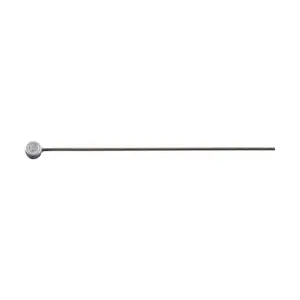
On a mountain bike equipped with V-Brake, cantilever or mechanical disc brakes, the lever force goes through an inner cable made of steel, about one and a half millimetres in diameter, which slides inside a housing. This housing, coiled to avoid flattening during heavy braking, is generally five millimetres in outer diameter and contains a thin inner plastic housing that reduces friction. At the lever end, the mountain bike cable ends in a cylindrical head, barrel-shaped, while road levers receive a pear-shaped head: the two are not interchangeable.
The rest of the braking system
Mountain bike braking also comes in:
All braking items are gathered on the braking page.
Jagwire Elite kit, Shimano cables and Fibrax
The Jagwire Elite kit combines polished stainless steel cables, pre-stretched to prevent them from loosening after installation, with housings that have a smooth inner coating: braking becomes smoother and more progressive, and the kit fits Sram as well as Shimano levers. The stainless steel cable sets Shimano come with their cable and housing ends, a complete solution for replacing an original braking system. The Fibrax cable for tandem bikes, much longer than a standard cable, connects to the rear caliper of a two-person bike, which has a wheelbase significantly greater than that of a typical mountain bike.
Galvanised steel or stainless steel: workshop boxes
Boxes of one hundred cables Saccon, P2R and Newton are aimed at workshops, clubs and rental services that maintain a fleet of bikes. Galvanised steel, protected from rust by a layer of zinc, remains cost-effective but oxidises more quickly once this layer wears out due to friction; stainless steel lasts longer against corrosion, which is an advantage for bikes that are frequently washed or stored outside. During assembly, the cable is cut to the right length, an aluminium end is crimped to its tip to prevent fraying, and smooth housing loops are ensured without tight bends that would increase friction.
Good deals
Great bargains can also be found in good deals, promotions, clearance, sales, and Black Friday. The new arrivals showcase the latest collections, and items shipped within 24h are prepared and dispatched in 24 hours. The highlights of the year follow a steady order: the Black Friday at the end of autumn, the year-end holidays, the winter sales, the French Days in spring, followed by summer sales and back-to-school time.
Frequently Asked Questions
When should I change my brake cables and housings?
As soon as the lever becomes hard or does not return properly, if a strand of the cable frays or the housing cracks. On a mountain bike that is ridden all year in mud, an annual replacement keeps braking precise and predictable.
Can I use a derailleur housing for brakes?
No: the derailleur housing, with longitudinal strands, is designed not to change length and ensure indexing, but it can burst under the high pressure of braking. For brakes, only a coiled housing ensures safety.
How do I cut a brake housing without crushing it?
Use a cable cutter with crossed blades, which neatly cuts through the coil. Then re-open the internal passage with a punch, file the end squarely and attach an end for a firm fit in the lever and caliper.
Why does my brake stay hard despite a new cable?
The housing is often to blame: too short, bent or badly cut, it can hinder the cable's movement. It's also essential to check the pivots of the lever and caliper, which may seize up without maintenance, as well as the wear of the pads or discs.
Should I lubricate a brake cable?
With a housing that has a smooth inner coating, thick grease should be avoided, as it attracts dirt; a drop of light oil is sufficient if needed. A housing without a coating, on the other hand, benefits from a light film of grease on the cable during installation.






