
Swim Clearance
The swimming clearance includes end-of-line products for the pool and open water: women's one-piece swimsuits, men's briefs and jammers, silicone or latex swim caps, and goggles for adults and children. The top brands in the pool, Speedo, Arena, and TYR, are alongside Tremblay, known for its club caps, providing everything you need for lunchtime laps and competitions.
Get equipped for laps and the club, at a better price.
Women's one-piece swimsuit: chlorine resistance and back shape
For training, the first criterion of a one-piece swimsuit is its chlorine resistance. Classic elastane, which is very comfortable, stretches and fades after a few months in the pool; polyester fabrics, like TYR's Durafast Elite, hold their shape and colour much longer. The back then changes the feel in the water: a racerback, which is very cut-out, frees the shoulder blades for freestyle, while a cut-out back, like that of the TYR Cutout, holds well without restricting shoulder rotation. TYR, founded in California in 1985, takes its name from Týr, the Nordic god of courage. More covered models like the Arena Challenge and Speedo are suitable for aqua fitness and swimmers who prefer more support for the bust.
End of swimming stock
The swimming clearance sale is organised by type:
- Women's swimsuits.
- Men's swimsuits, briefs and jammers.
- Goggles.
- Accessories, swim caps and kickboards.
Brief or jammer: what to wear at the pool for men
The swim brief remains the most free-fitting outfit for swimming: it doesn’t hold water and allows for total hip movement, making it the choice of many club swimmers. The jammer, which descends to mid-thigh above the knee, provides more muscle support and coverage, without floating like a beach short. For training, models made from chlorine-resistant fabric, such as the Durafast Elite brief and jammer from TYR, are chosen. In competitions, international rules limit men's swimwear to one piece that does not exceed the navel and does not go below the knee, which excludes full-length suits of the past.
Other sports on clearance
The clearance sale extends to other sports: football, running, lifestyle, bikes, motorcycles, handball, basketball, equestrian, camping, on the clearance page.
Swim caps and goggles: silicone, latex, seals and lenses
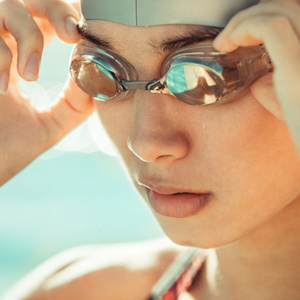
The silicone swim cap, thick and smooth, like the Speedo moulded cap or the Tremblay, glides in the water, better protects hair and lasts for years. The latex cap, thinner and lighter, like the Megaform, keeps a little less warm and wears out faster; it should be avoided by those with allergies. The fabric cap is reserved for younger swimmers and aqua aerobics. For goggles, it’s the seal that ensures waterproofing: it should fit the eye socket without pressing. Tinted or mirrored lenses protect against glare outdoors, clear lenses are suitable for indoor pools, and children's models, like the TYR Aqua Blaze, have a smaller frame and an easy-to-adjust fit.
Frequently asked questions
At what age should I start swimming?
Babies start swimming as early as a few months old, always with a parent. Learning strokes with a lifeguard generally begins around four to six years old, when the child can coordinate arms and legs and is willing to put their head underwater.
Which stroke is best for losing weight?
Freestyle, swum continuously, works the whole body and raises the heart rate: it’s the most effective stroke for burning energy over time. Alternating fast and slow sets, two to three times a week, yields better results than swimming lengths at the same pace.
Which muscles does swimming work?
The back, shoulders and arms provide pull, the abs keep the body horizontal, and the thighs provide the kick. Breaststroke works the adductors and pectorals more, while backstroke improves posture.
What size swimming swimsuit should I get?
A swimming swimsuit should fit snugly: it may seem tight when dry but loosens slightly in the water. If it gapes at the straps or the back, it will fill with water while swimming; between two sizes, regular swimmers should opt for the smaller size.
Which stroke is best for back pain?
Backstroke and freestyle, swum with the head in line, elongate the spine and strengthen the muscles that support it. Breaststroke with the head out of the water tends to arch the lower back and neck: it’s better to avoid it, or swim it while exhaling in the water.






